
#223: DESIGN DOWN THE DANUBE
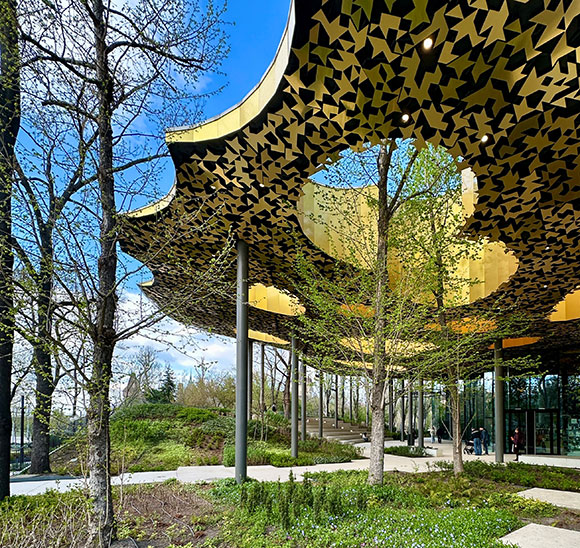
House of Music, Budapest, Hungary (photo by Anthony Poon)
The second longest river in Europe at 1,800 miles in length, the Danube courses through ten countries. My recent Danube cruise journeyed through three of the ten: Hungary, Austria, and Germany. My 14 most striking design events are as follows, in order of travel.
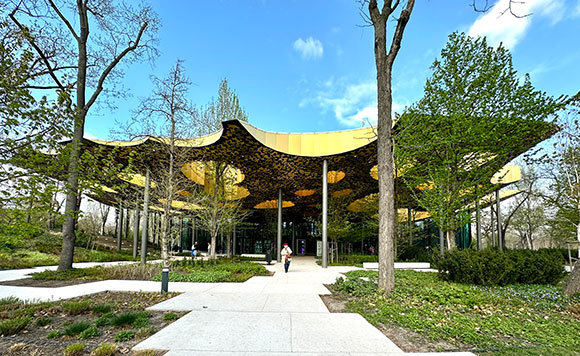
1: Strolling through Budapest’s City Park, I stumbled upon the House of Music. This cultural center, by Sou Fujimoto Architects, explores the relationships of music, light, nature, and sound. The surrounding trees appear to extend into the glassy structure as an ornamental ceiling of 30,000 metal “leaves.” This 100,000-square-foot-building offers two concert halls, exhibition spaces, library, café, and an immersive, 3D-aural experience within a hemispherical sound dome.
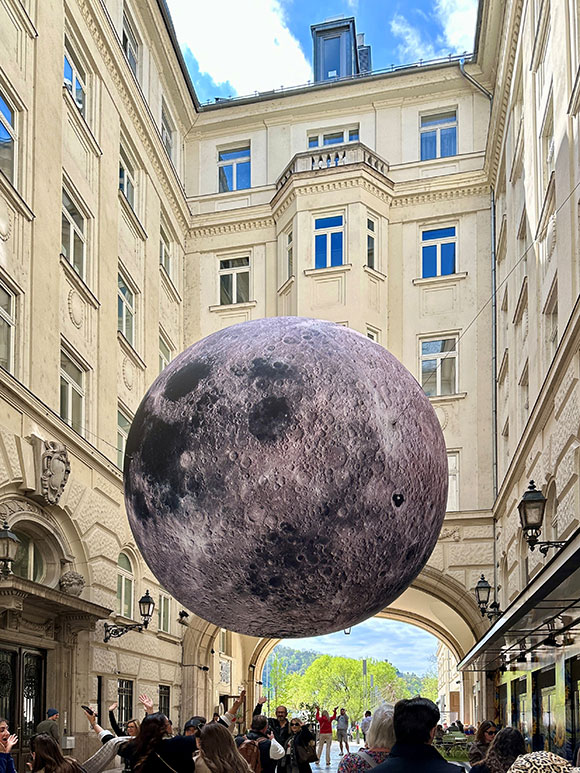
2. The traveling art installation from the Museum of the Moon lands on Piarista köz, a pedestrian passage tucked away in central Budapest, Hungary. British artist, Luke Jerram, created this 1:500,000-scale replica of the moon. Based on NASA photography, the 23-foot diameter sphere accurately depicts the moon’s lunar surface.
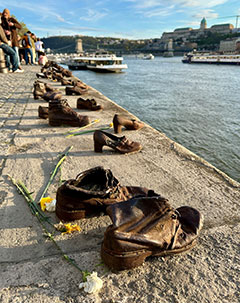
3. The Shoes on the Danube Bank, a remarkable memorial created by film director Can Togay and sculptor Gyula Pauer, captures the Second World War fascist massacre of thousands of Jews. Since shoes were considered valuable, the victims were ordered to remove them. They were then executed at the edge of the bank, bodies dropping into the Danube. Installed in 2005, this memorial honors the murdered women and men through the 60 pairs of cast iron shoes facing the river.
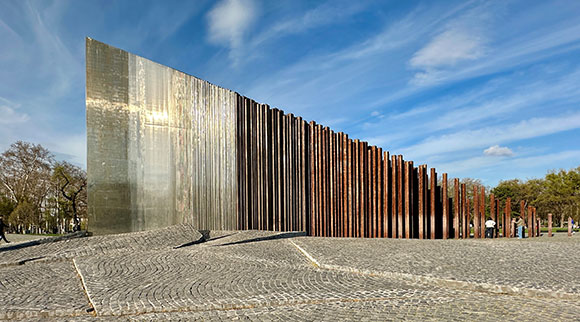
4. 1,956 vertical steel planks transition from a rusted patina to a polished chrome, representing Budapest’s students’ and laborers’ journey towards victory over Soviet communist regime. Designed by i-Ypszilon Group, this 1956 Hungarian Revolution and War of Independence Memorial stands as a powerful blend of architecture, sculpture, and abstract art.
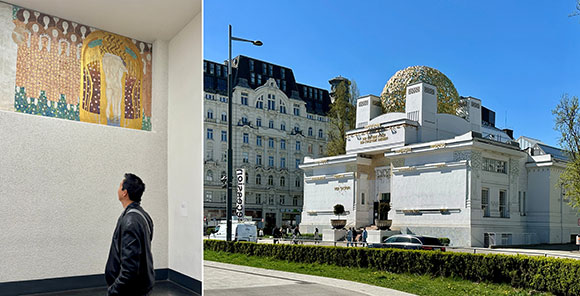
5. Within the lowest floor of the Secession Building, Vienna, Austria, sits the famed Beethoven Frieze. This museum, by Austrian architect Joseph Maria Olbrich completed in 1898, housed the works of rebellious artists that challenged the established Viennese art scene. Painter Gustav Klimt created the 1902 frieze on the 75th anniversary of Beethoven’s death. Depicting the musical genius’ Ninth Symphony, Klimt painted directly on the museum walls as a permanent exhibit, using his signature gold leaf throughout.
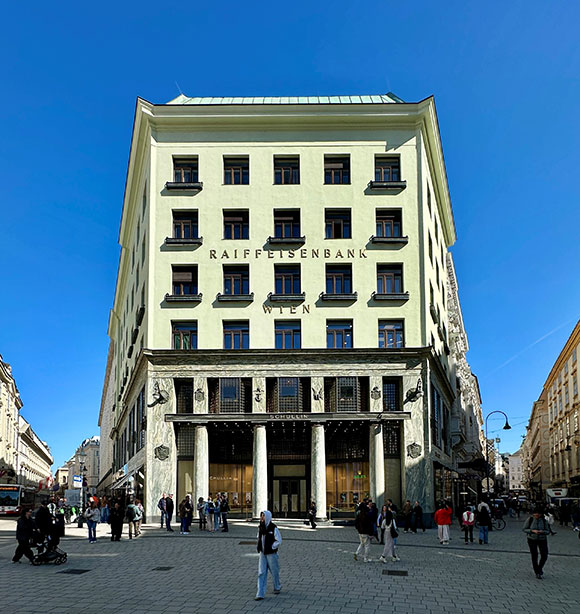
6. Architect Adolf Loos’ mixed-use building, the Looshaus, stands defiantly in Vienna’s city center as a signature work of Viennese Modernism. Though appearing somewhat traditional today, the structure was rejected by the city when completed in 1912—considered plain, unattractive, and controversial compared to the ornate Secessionist movement. Looshaus’ unadorned, upper floor windows caused an uproar, ridiculed by the Vienna’s population and rulers for “inappropriate nakedness.”
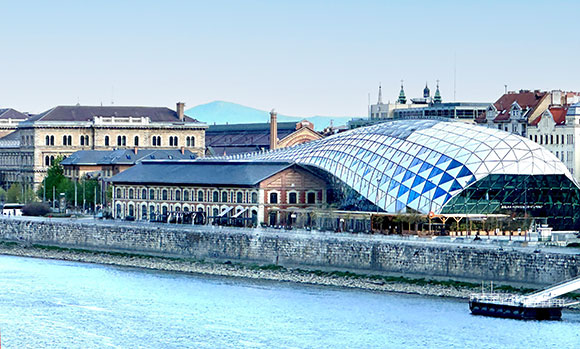
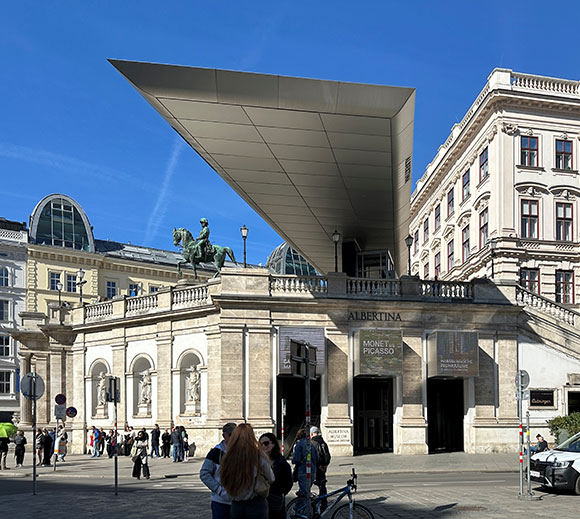
7. I have always favored architecture that explicitly presents a dialogue between old and new vs. the uninteresting narrative of the seamless addition. In Budapest, at the Bálna Building, known as the “Whale,” Dutch architect Kas Oosterhuis designed a glassy addition that literally swallows the existing 19th-century brick warehouse. While in Vienna, the Albertina Museum daringly floats a titanium wing over its Neoclassical building, known as the “Flying Parasol,” designed by Austrian architect Hans Hollein.
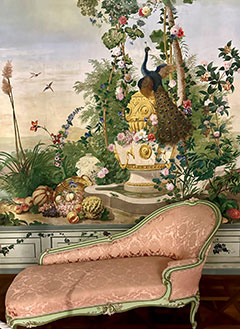
8. Schönbrunn Palace, completed in 1713 by architects Johann Bernhard Fischer von Erlach and Nicolaus Pacassi, served as the summer residence of the Habsburg rulers, rivaling Versailles’ opulence and grandeur. Located in Hietzing, the 13th district of Vienna, Schönbrunn’s expansive 1,441-room Baroque palace housed the popular empress Maria Theresa. Escaping the heat of the upper floors and in a culturally-shocking move, she relocated her suite to the common ground floor, having all her rooms extravagantly painted in the French illusional style of trompe l’oeil.
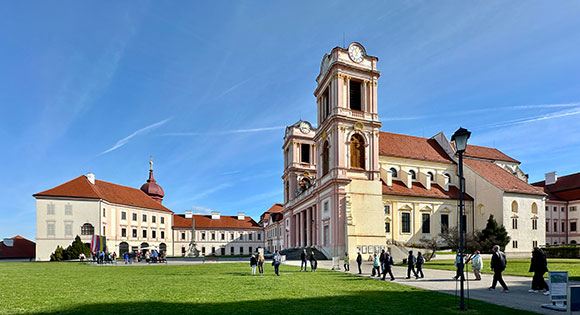
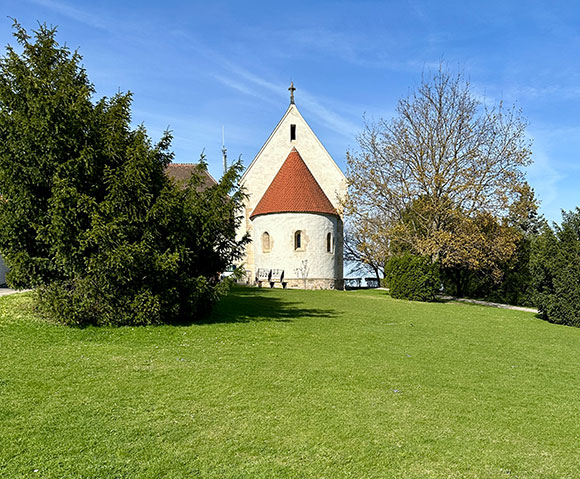
9. In Krems of Lower Austria stands the faithfully preserved Göttweig Abbey, founded in 1083, rebuilt in 1718. The Benedictine monastery campus includes a church, chapel, castle, crypt, apartments, medieval remnants, and the main abbey building by Johann Lucas von Hildebrandt—as well as one of the most elaborate Baroque staircases and a renowned library of period manuscripts, books, and antiquities, even historic coins.
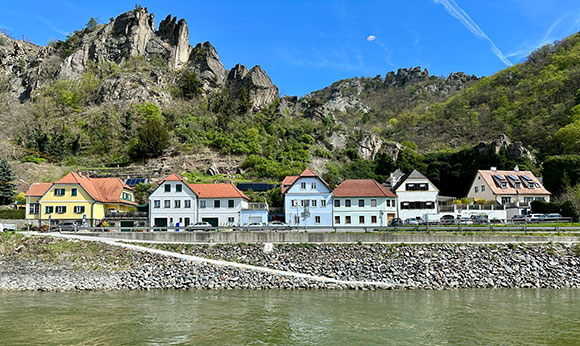
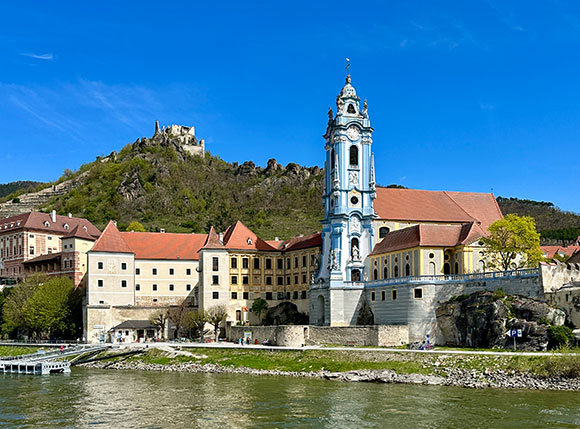
10. Honored as a UNESCO World Heritage Site, the Wachau Valley of Lower Austria’s Danube River sits between the towns of Melk and Krems. The 22-mile length of land has been settled as early as the Paleolithic era, 30,000 years ago. For design and history enthusiasts, the UNESCO-listing requires preservation of the local towns’ architecture and agriculture in their exacting period details, such as the playfully blue Durnstein Castle, finished in 1740.
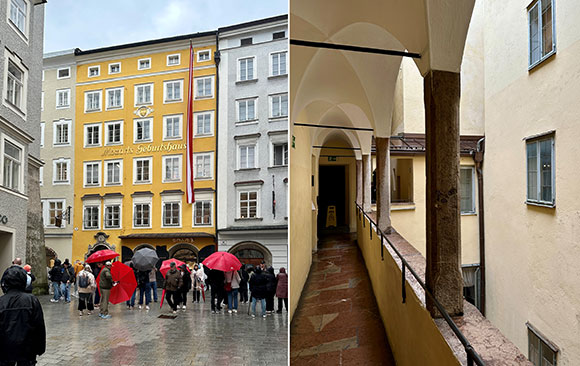
11. As a classical pianist, my tour of the birthplace of Wolfgang Amadeus Mozart hails as a landmark experience in Salzburg, Austria. Born 1756, Mozart lived modesty on the third floor of this humble apartment building, relocating to a nearby apartment in 1773, then to Vienna in 1781 where he flourished. Today, three levels of the famed yellow building comprise a museum comprehensively exhibiting historical memorabilia: from musical instruments to letters, from music scores to paintings, from furniture to knick knacks—even a lock of the composer’s hair!
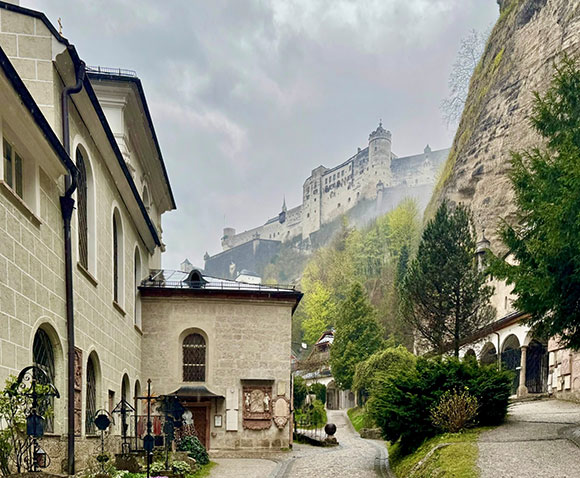
12. The Hohensalzburg Fortress, one the largest medieval castles in Europe, sits atop the Festungsberg Mountain, overlooking Nonnberg Abbey. This Romanesque Gothic monastery, founded 712, ranks as the oldest nunnery in Austria and Germany. Fun fact: The abbey is one of many Salzburg film locations for The Sound of Music, and was the wedding venue for the real-life Benedictine postulant, Maria von Trapp.
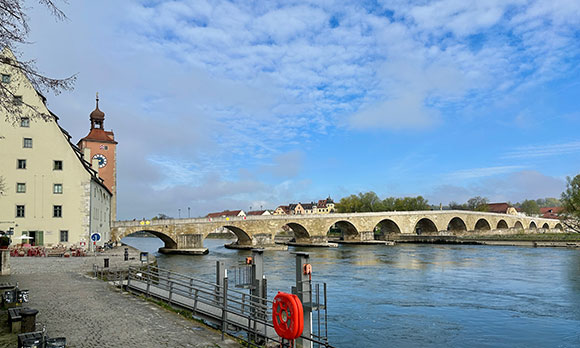
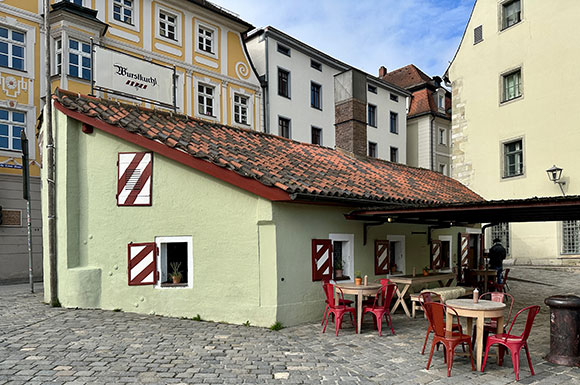
13. In Germany completed 1146, the Stone Bridge, spanning the Danube between Regensburg and Stadtamhof, is the oldest bridge in the country, while the adjacent Historische Wurstkuchl (German for “historic sausage kitchen”) is the oldest restaurant in the world. Prior to serving their famous bratwurst sausages, the simple green building was the construction office for the famous bridge, which stands as an impressive engineering feat of medieval construction.
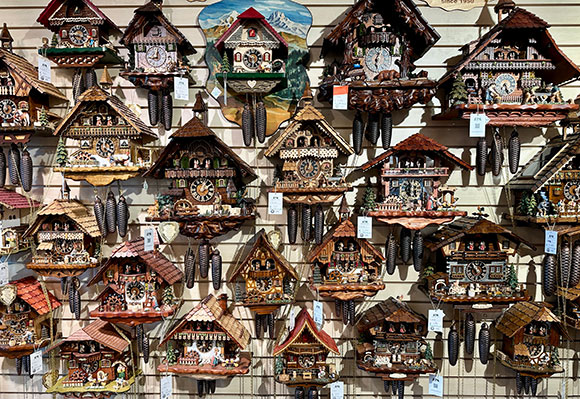
14. Originating in the 18th century Black Forest region, Drubba is the premier manufacture of cuckoo clocks. Despite today’s pop culture cartoonish reception of such clocks, the hand-carved tradition that started in 1738 continues faithfully today in Regensburg, and has become one of Germany’s iconic crafts around the world.
