
#232: THE SECOND STUDIO PODCAST, PART 2 OF 4 | POSTMODERNISM, WRITING, AND WINNING

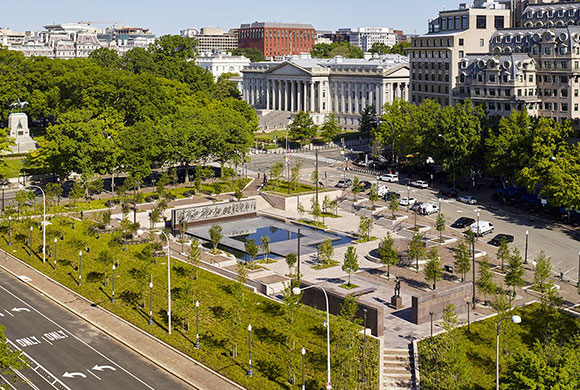
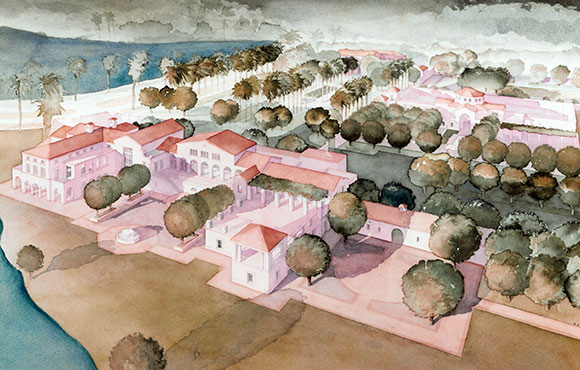
Feature Animation Building, The Walt Disney Company, Burbank, California, by Robert A.M. Stern Architects (photo from ramsa.com)
Following up on Part 1 of the 517th episode of the podcast, The Second Studio, here is another segment (edited for length and clarity). Hosts David Lee and Marina Bourderonnet and I discuss my early years as a Postmodernist, being an author, and appreciating the wins.
David Lee: So the years between undergrad and grad, you were working at offices during that time?
Anthony Poon: In New York City, two very significant jobs. I was in my early 20s, just graduated. The first office was M. Paul Friedberg, not a name that everyone may know these days, but Paul was a prominent urban planner and landscape architect in the 60s and 70s. The other office, quite interestingly, was Robert A. M. Stern.
When in college in the mid-80s, Postmodernism was at its height. Leaders of this movement were being taught at Berkeley: Robert Venturi, Charles Moore, Charles Jencks, Stanley Tigerman, Michael Graves, etc. And Robert Stern. So getting a job at his office was a win. I loved the work. I loved the culture. But these days, it’s not work I would do. Today, I am an architect that enjoys Modernism and contemporary ideas.
David: Back then, did you know that your preference was Modernism? If you take the average architect who’s a staunch believer in contemporary architecture, and you drop them into a Postmodernist’s office, this architect might not have a good time. But you were okay at that time? Is it because you didn’t know what you liked?
Anthony: I really didn’t. I had just graduated college and moved to a new city. All my professors had pronounced Postmodernism as the direction of the future. So the job with Stern made sense. But here’s the interesting thing. When I got into grad school at Harvard, I spoke to Stern on my way out. He said specifically, “When you get to Harvard, you will look back at the years at my office and realize that it wasn’t for you.”
Stern knew there was going to be a philosophical juncture that breaks from his Postmodernism to the incoming Gropius / Mies van der Rohe / Corbusier education of Harvard.
And the last thing he said to me, which is quite funny, “You will not learn anything at Harvard other than to dress properly.”
I only realized recently reading Stern’s memoir that he was upset that he did not get into Harvard for grad school. He hated that institution. He ended up going to the competitor Yale and became the dean for decades. He probably was upset that as one of his promising young designers, I left his office to go to the enemy.
David: After grad school, did you stay on the East Coast?
Anthony: I stayed only for a tiny bit before moving to Los Angeles. I think it was probably the weather that drove me back to California. Going to school on the East Coast and riding a bike in a snowstorm with a wind chill of 50 below is pretty brutal.
David: When did writing become such a key part of what you do?
Anthony: When I landed in Los Angeles, I wrote mainly because I had time. It was the early ’90s, and there was a recession. There were very few architectural jobs available. I couldn’t get any interviews. If I reached someone in an office, he would tell me that he just got fired, and the office is closing down.
LA was the kind of a place where one could sort of do whatever. So being young, being creative, I started things like painting, selling paintings, writing, pretending to write poetry, playing music—making ends meet. But it wasn’t until recently, maybe within the past 10 years, that I started really diving into writing: industry articles, essays, getting a literary agent, publishing books. Writing has become a big part of what I do. It ties together aspects of my life, art, music, architecture. It’s a way of getting my voice out there in hopefully some form of legacy.
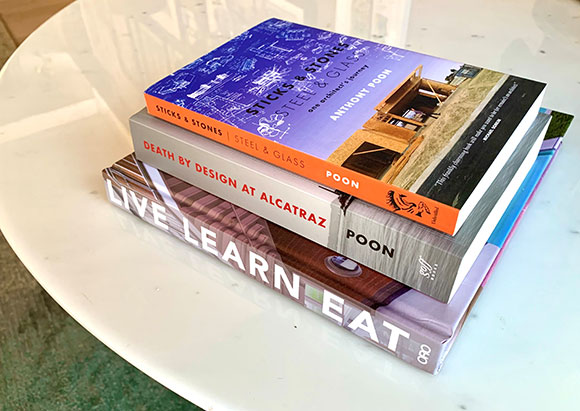
David: There are a good number of architects who have written things, but there’s a lot who don’t. Maybe in part because being an architect takes so much time. How do you have time to write or play music?
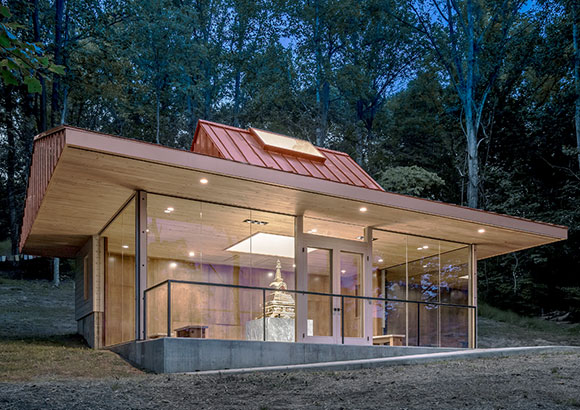
Anthony: I’m often asked that. Architecture, music, writing, art—to me, it’s all a creative force that propels me forward every day. I think if you’re passionate about something, you find the time. I get the same rewards whether I’m designing a Buddhist temple or a school versus writing an essay or composing a piece of music. To me, they’re all part of a single artistic journey.
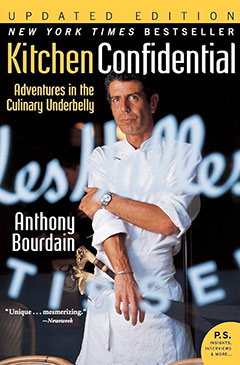
As you said, a lot of architects do write. A lot of that falls into an academic or intellectual kind of thing. A lot of books by architects aren’t really literature. They’re monographs, beautiful coffee table books. I was inspired by the book, Kitchen Confidential, by Anthony Bourdain, the chef. He wrote about the underbelly of the restaurant world. And I thought: Why couldn’t I write the behind-the-scenes of the architecture world?
How many architects have written about being an architect? A lot of the architecture books are curated interviews, critiques of buildings or design movements, or as I said, intellectual discourses. What about writing what happens in an architecture office or what an architect actually does each day—and writing for a mainstream audience, which is what Kitchen Confidential did? It wasn’t written for restaurant developers and chefs. It was written for the rest of the world.
David: Do you find that of the four—writing, music, architecture, art—one is more satisfying, while others are less satisfying?
Anthony: I think architecture, as most of our colleagues would probably agree, can be very frustrating. For example, when you submit a project for agency approvals, that Plan Check process can be horrific. Then I compare that to sitting at my piano, opening up a piece of music, say Mozart or Beethoven, and just playing. There are no frustrations. But the rewards in architecture, after getting through trials and tribulations, are great, because you’ve earned it at the end.

It’s like when I lived in New York, and I had to buy groceries in the middle of winter. Now, if you’re in Los Angeles, you drive your car to the store. It’s 75 degrees out, you put the groceries in your trunk, you drive home, park your car, and put your groceries in the kitchen. But in New York, it’s snowing, it’s a blizzard, there’s 12 inches of snow on the street, and you don’t have a car. You put on ten layers of clothes with a hat, scarf, and gloves, and you hike to your local grocery store. And you can only carry so many bags. With your car in Los Angeles, you can put 10 bags in your trunk. In New York City, you’re buying only two bags. By the time you make it home, those dozen eggs are so worthwhile, because you earned it.
So this is similar with architecture. There’s so many challenges that you face when doing a project. At the end, architects should be proud of themselves for having achieved success.
David: One of the things that has become clear to me the more I practice as an architect is the amount of respect I have for any architect who gets a building done. I’m like, “You won in my view.” Assuming it’s not total crap, you won. It is an incredible accomplishment for any architect to do one building that’s decent, because there are so many hurdles. There are a lot of things outside of our control as architects that hit the project or can kill the project. If you get through it, it feels like a miracle.
Do you find between the different pursuits that sometimes when you’re working in one mode, you will unlock something in another? When you’re working on music or writing, does that unlock something about a design problem you’ve been wrestling with or vice versa?
Anthony: For certain. This goes back to my activities not being distinct and separate. It’s all intended to have overlaps and influence each other.
(Part 3 of 4 coming soon.)
