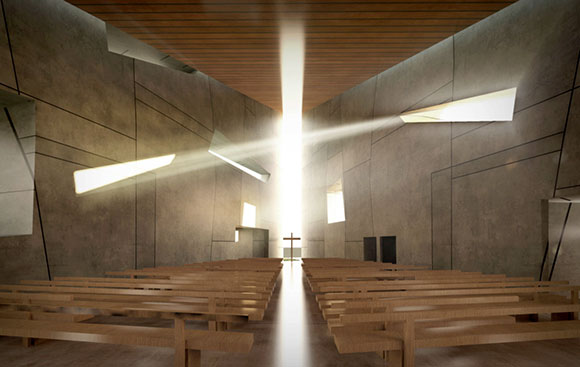
#220: ARCHITECTURE OF WATCHES
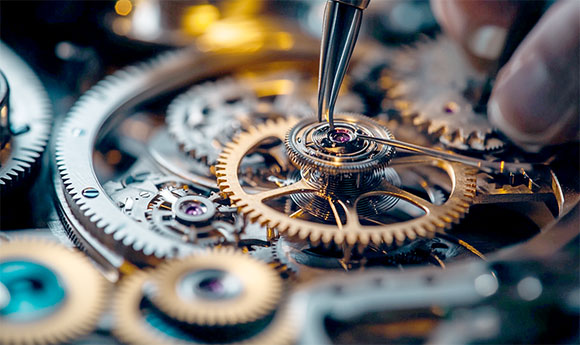
AI image of watch interior (photo from Pixabay)
One often thinks of architecture as buildings, as structures of diverse sizes, from house to temple, museum to high-rise. As one scales downward, architecture also includes the design of cabinetry, furniture, and accessories. Michael Graves’ ubiquitous teapot, for example.
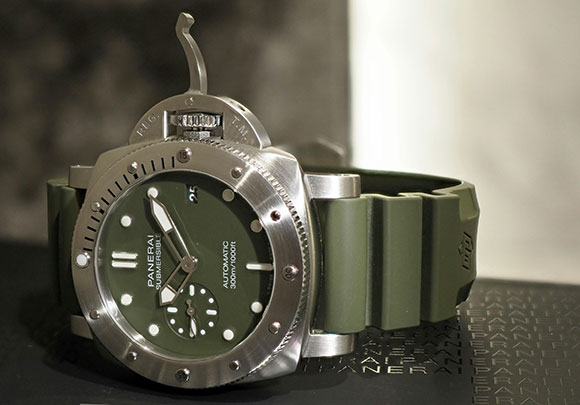
So how about a watch? If a work of architecture comprises form, function, engineering, and craft, the design of a watch is indeed architectural. Architecture also enlightens the human spirit, engaging society and history through artistic expression and cultural impact. So too a watch does.
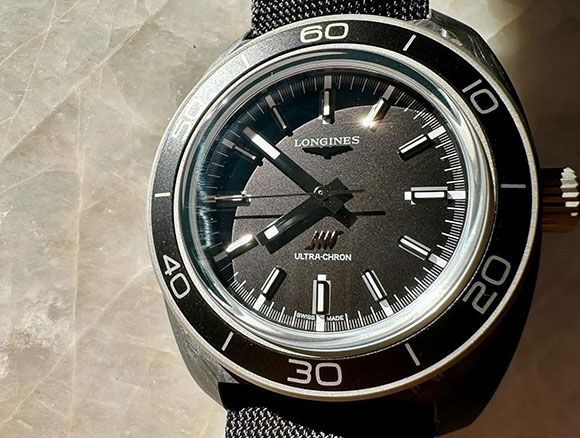
Functionally, a watch does one simple thing: tell time. Some watches offer more in terms of function, often called “complications” (an odd typically-negative word), such as a stopwatch, dual time zones, moon phase display, power reserve indicator, and alarms with chimes and gongs. For telling time, the 1925 Patek Philippe 97975 was the first watch to have a perpetual calendar of day, month, year, and even indicated leap years. But with the iPhone, do we need a watch anymore?
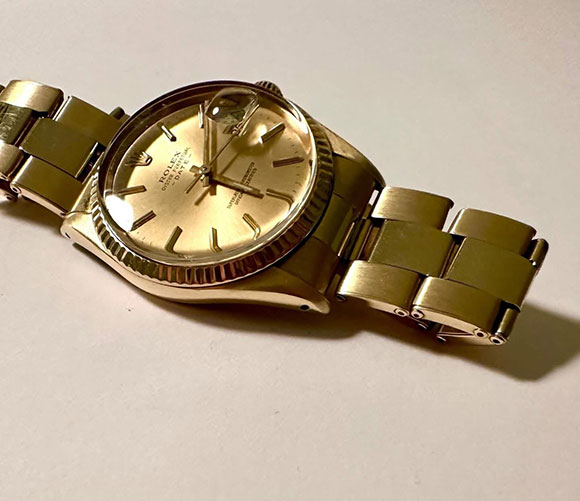
A watch isn’t just about telling time, and a building isn’t just about keeping rain out. They are so much more than the mere function of time or shelter. One can buy a watch from Swatch for $60 or Richard Mille RM 056 for $6 million. And yet, both tell time. One can build a house for $150 per square foot or over $5,000 per square foot. And yet, both provide shelter. Horologists (those who engage in the study of watches) don’t just admire time-keeping accuracy, but rather, designs that speak to the heritage of a centuries-old art form.
In 1969, Seiko released their Quartz Astron 35SQ, the first battery-powered watch, considered the most accurate at the time. One would think that such convenience and precision would be favored in horology, yet most serious collectors ironically favor self-winding watches or even daily manually winding. Even though such watches are never as accurate as a battery-driven ones, the admiration, nostalgia, and fetish for self-winding mechanisms honor the complex engineering of watch making traditions.

Similarly, some residents appreciate a five-story, walk-up brownstone, instead of a contemporary condo tower with an elevator. Some auto enthusiasts prefer tinkering every weekend on their vintage Jaguar XKE, rather than having a no-maintenance Tesla.

Just as we admire the engineering of the Eiffel Tower, Golden Gate Bridge, and World Trade Center Transportation Hub, the beauty of a watch’s engineering—its graceful and iconic forms, its internal intricacies—draw us in as a work of high art.
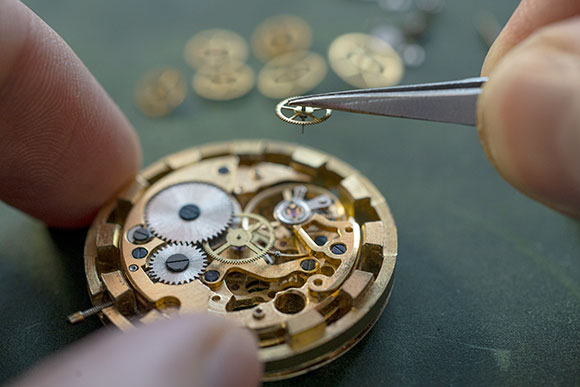
Like jewelry, a watch is fine sculpture. But jewelry, such as an engagement ring, is at its most reductive level, a mere piece of metal and a rock. Whereas a luxury watch, with its 400 to 1,000 moving parts of springs, gears, cylinders, screws, and wheels, represents an impressive achievement of craft. The assembly of a single watch can require over 2,000 hours, often done under a microscope with the most minute of tools, such as a single hair paintbrush and a tweezer the size of a pin. Akin to building an airport, such feats of construction is often beyond comprehension.

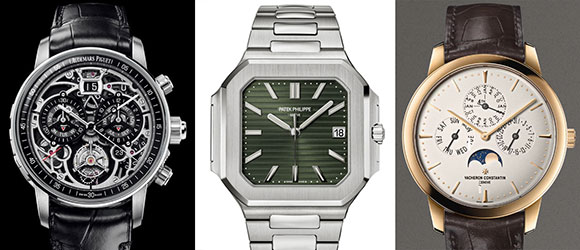
The love for watches find common ground with the love for architecture. Both draw on the practical and the emotional, the structure and the soul. Both timepieces and buildings embrace fashion and status. A city prides itself on its civic buildings, like a Fenway Park or Sydney Opera House. Those that don a Rolex or one of the “Holy Trinity” (Audemars Piguet, Patek Phillippe, and Vacheron Constantin) are making a personal statement, in this case, of prestige and exclusivity.
Some of these elusive brands go as far as not allowing a customer to simply buy a watch, regardless of one’s wealth. The company evaluates each potential customer as a good fit or not for the watch. After an interview process (What watches do you own? What are your interests, your profession? Would you be an appropriate owner?), if successful, then comes being assigned an official representative, an advocate.
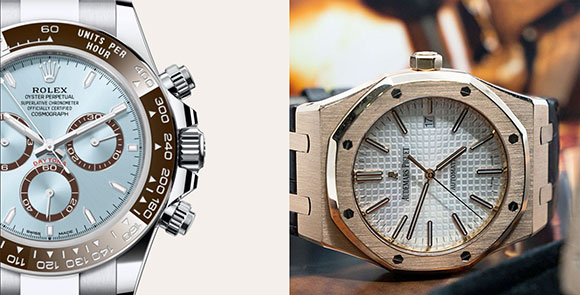
Following that, one must create a “purchase history” of numerous entry level or less popular watches from that targeted brand. After years of this activity, you may or may not be placed on a waiting list to be “allocated” the desired watch. One could wait five-plus years for a Rolex Daytona or Audemars Royal Oak, with no guarantee that a $40,000 watch will be graced upon you to purchase.
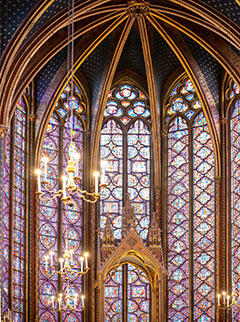
No doubt that design and the finer-things-in-life are a passion, whether admiring a Jaeger-LeCoultre watch or visiting Sainte-Chapelle in Paris—like collecting Rothkos, enjoying A5 Japanese Wagyu, tasting Château Lafite Rothschild, driving a Lambo Revuelto, listening to a performance of Missa Solemnis, or playing at Royal County Down.
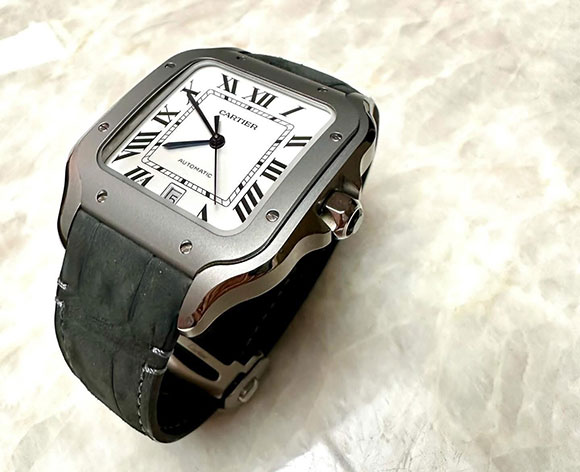
Two side notes: 1) I am fascinated by a watch enthusiast’s interest in watch dial sizes. An admirer of your watch might say, “Nice Omega. Is that a 40 or 42?” As in millimeters.
But no one ever says, “Nice shirt. Is that a large or extra-large?”
2) Why the watch “reference numbers,” such as the Hublot 542.NX.891G.NR? Fanatics like to discuss timepieces by their model number, but I have yet to hear someone spew the VIN number of their new Porsche Carrera.