Tag Archives: DRAFTING TOOLS

#229: THE INDUSTRY | THEY ARE A-CHANGIN’
August 28, 2026

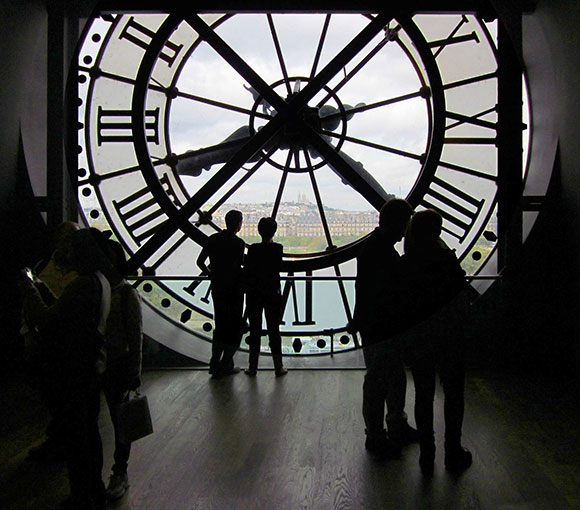
Musée d'Orsay, Paris, France (photo by Guy Dugas on Pixabay)

It’s true: Life just gets more and more complicated. And so it is for the field of architecture. Do we yearn for simpler times—the cherished good ol’ days? Progress is good, supposedly. For better or worse, the evolution of business is inevitable. Bob Dylan said it well: “The order is rapidly fadin’. And the first one now will later be last. For the times, they are a-changin’.”
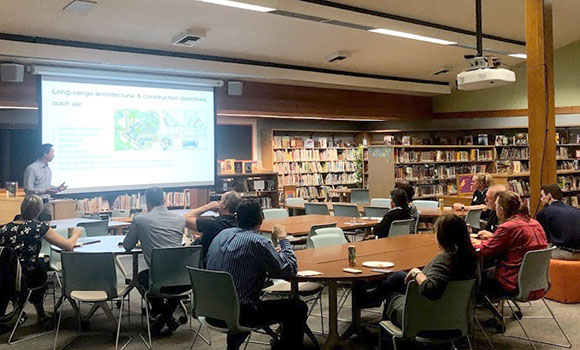
Poon Design workshop, Berkeley Hall, Los Angeles, California (photo by Poon Design)

Architecture is a client service, and in the past, communication was primarily an in-person presentation at the architect’s office, followed by some phone calls, maybe a fax(!). Today, the portals of communication are not just endless and endlessly advancing: email, voicemail, texts, socials, WeChat/VoIP, FaceTime, Zoom/Teams/Meet, IM, chat rooms, ChatGPT, VR/AR/AI—so many more to come that we can’t even imagine. One day, my thoughts about a project may instantaneously appear within the consciousness of the client.

(photo by Edar on Pixabay)

Take contracts. In the early days of “gentlemen relations,” a hand shake or one’s word sealed the deal. To quote Tom Cruise’s 1996 film, Jerry Maguire, “I don’t do contracts, but what you do have is my word. And it’s stronger than oak.”

Generations ago, the industry standard contract between architect and client from the American Institute of Architects (“AIA”) was a one- or two-page document. Today, the norm is the AIA B101 contract used in conjunction with the AIA A201—a total of 57 pages. Add in exhibits, recitals, definitions, general provisions, amendments, disclosures, and legal this-n-that. Don’t be surprised to see contracts nearing 100 pages.
(photo by Poon Design)

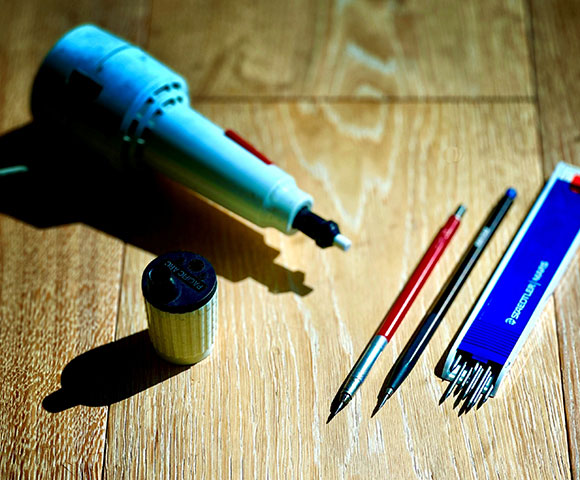
I recall that in my 20s, as a new employee, I only needed to bring basic drafting tools. The company supplied the necessary daily needs. Meaning, I brought my mechanical pencil, and the company supplied the lead sticks. Meaning, I brought my electric eraser, and the company supplied the eraser sticks.

These days, the tools have evolved from pencil and paper to the vast array of software, like Windows, Microsoft, Adobe, AutoCAD, Revit, 3ds, Enscape, SketchUp, and so on. Incoming like a meteor is AI. There is also the hardware, like a computer, multiple monitors, Cat6, battery backup, surge protector, and all sorts of ergonomic paraphernalia from an adjustable standing desk to a tilt-swivel keyboard tray.
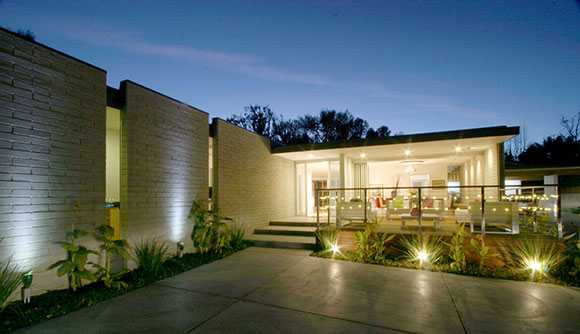
S/B House, Encino, California, by Poon Design (photo by Poon Design)

I remember when I could walk into the Plan Check counter for say, a house renovation. I would walk out with agency approvals within an hour or two. Today, that same project could take 6 to 12 months to be approved, as the single counter approach has been replaced by ever changing multiple departments on multiple floors in multiple buildings. And the times, they aren’t just a-changin’, codes and processes are a-changin’ so fast that the city departments themselves are sometimes unaware of their own changes.
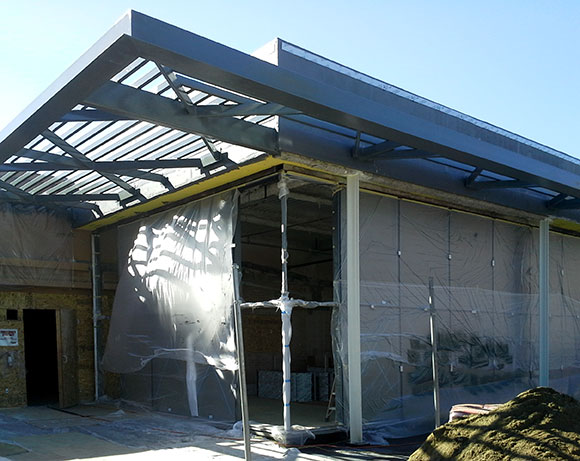
Din Tai Fung, South Coast Plaza, Costa Mesa, California, by Poon Design (photo by Poon Design)

Construction was once a craft, performed by guilds of craftsmen and artisans. An architect’s construction drawings back then stated the design intent in a dozen or so sheets. From such drawings, the contractor/craftsmen knew what to do, took pride in what they were building.

For the present, that same project might require hundreds of drawings, notes, specifications, disclaimers, and endless details and dimensions—suggesting that the contractor will do it wrong, try to cut a corner to make a buck, and/or takes no interest in the design. Such ridiculously meticulous and exhaustive construction drawings become the unfortunate legal requirements that inherently pit an architect against a contractor, like a soon-to-be-married couple confronting a 100-page prenup.

The ol’ days of construction involved a master architect providing verbal direction at the site. That is replaced today by an architect drowning under extensive construction administrative services, such as: RFIs (Request for Information); submittals and samples: construction management software: meeting agendas and minutes; and numerous site meetings, video conferences, and office hours. The concept of craftsmen building with artisanal delight has been reduced to a subcontractor or vendor asking an architect to approve the nails and screws being used.

(Photo by Markus Kammermann on Pixabay)

The thing about change today is that it isn’t just always happening; change is happening faster than we are prepared for. By the time today’s webinar on the ‘predictions of AI in the workplace’ has concluded, AI has already exceeded these predictions. We know change is coming down the road, but we don’t know what change is coming down the road. As we struggle to adapt to self-driving cars, flying cars are advancing in other countries. Perhaps the fictional Star Trek “transporter” is already a reality—“beaming” someone to any location or even another planet by dematerializing the person into energy.
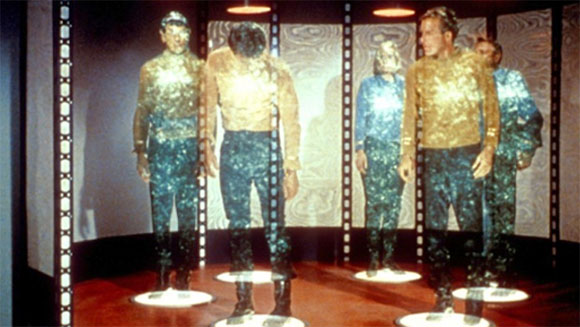
Transporter from TV series, Star Trek, 1960s (photo from CBS/whatculture.com)

Bob was astute:

     “The battle outside ragin’
     Will soon shake your windows and rattle your walls
     For the times, they are a-changin’”

Mural on South 5th Street, Minneapolis, Minnesota, (photo by Nikoloz Gachechiladze on Unsplash

#207: THE BRUTALIST | FILM REVIEW BY AN ARCHITECT

June 13, 2025

Library renovation, Laszlo Toth’s first project for his new client, Harrison Lee Van Buren, film still from The Brutalist, 2024

Over time, architects have appeared in hundreds of movies and TV shows—from Paul Newman to Tom Hanks, Michelle Pfeiffer to Sharon Stone, Keanu Reeves to Elliot Page. But this architect trope is rarely integral to the story. With the 2024 film, The Brutalist, we finally have a movie with an architect being an architect. But I raise an eyebrow or two.

Sure this Oscar-winning movie—3 hours and 34 minutes—is grand and ambitious, an epic sweep of heroism and faltering humanity, like many Oscar films. All blubber aside, I question the accuracy of the architect’s portrayal, the fictional Laszlo Toth—loosely based on the famed architect of the Brutalist movement, Marcel Breuer.

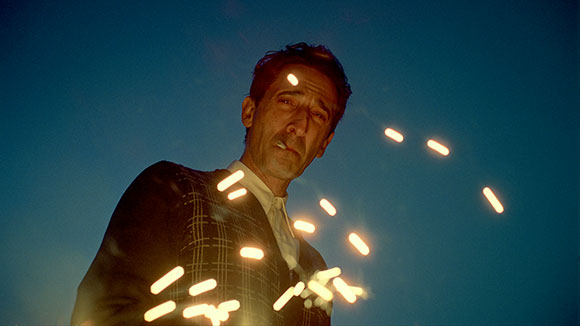
Architect Laszlo Toth, film still from The Brutalist, 2024

Please know this: My movie review is not so much a critique of narrative structure, directorial agenda, and cinematic achievement. Rather, as an architect, it is the details about architecture that vex me.

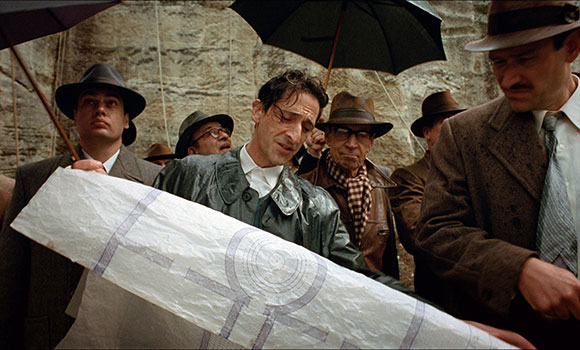
Architect and design drawing, film still from The Brutalist, 2024

First, the design proclamations are pretentious, even ridiculous, but perhaps it is accurate for the many architects who fall victim to what is mocked as “archi-speak.” Example from a Harvard architect, “Unlike architecture that seeks to articulate understandings about the nature of things through expressive or metaphoric mimings, this remarkable building yields us actionable space.”

Our hero, Laszlo Toth, spews lines like, “Nothing is of its own explanation. Is there a better description of a cube than that of its construction?”

And “…skylights that can also be viewed as demarcations of units of space…”

Or “For its harmony.”

The chapter titles also encourage teasing.

– The Enigma of Arrival
– The Hard Core of Beauty
– The Presence of the Past

Of the script, Dezeen magazine critiqued, “Like the architecture itself, the conversation is cliched nonsense”

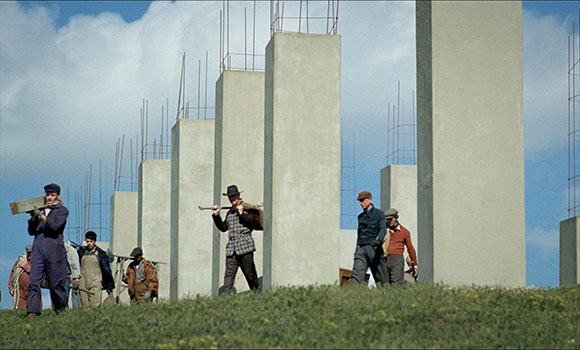
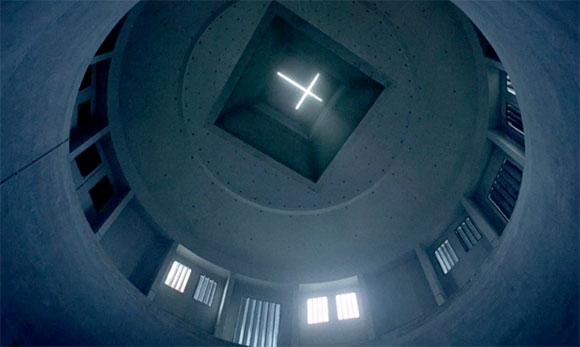
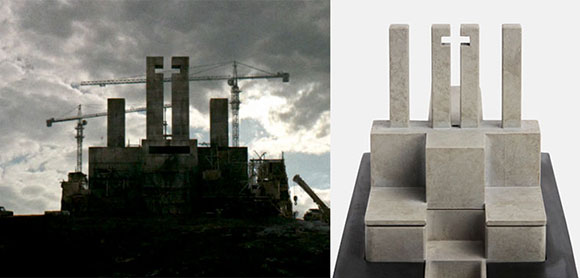
Under construction, The Margaret Lee Van Buren Center for Creation and Activity, film still from The Brutalist, 2024

Next, an architect is usually not a general contractor nor a structural engineer. But in The Brutalist, Toth is actually determining the number of construction workers needed and providing construction techniques. Every attorney to an architect will scold said architect for providing liability-stricken “means and methods” for construction. Architects design. The contractor builds. Simple as that.

Architect’s completed work, film still from The Brutalist, 2024

Speaking of the architecture, apparently no architects were consulted for this film. Perhaps one should have been hired to collaborate with the production designer, Judy Becker—competent and compelling, but appearing to have limited formal architectural training. For a movie about boxing, shouldn’t a boxer be consulted? For a movie about cooking, shouldn’t a chef be consulted.

right: Under construction, The Margaret Lee Van Buren Center for Creation and Activity, film still from The Brutalist, 2024; left: This image is not from the movie, but is “The Brutalist Scale Model,” $75 for the limited edition from the A24 shop.

We see familiar references to the work of Louis Kahn, Mies van der Rohe, and Paul Rudolph, but the resulting architecture, particularly the “visionary” community center—Toth’s career breakthrough project—is mildly interesting at its best, clunky at its worst. For that scene of the big presentation, I doubt any architect would walk into a public hearing with such a clumsy-scaled, crudely-made, white cardboard model.

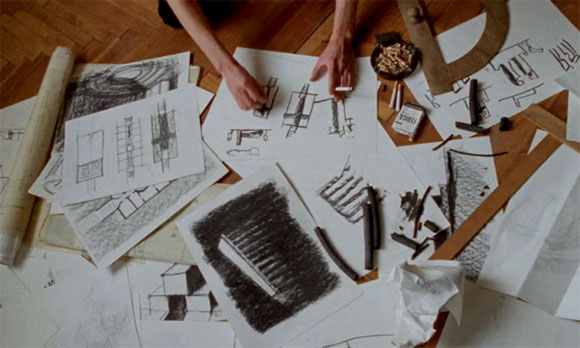
The creative process, film still from The Brutalist, 2024

Lastly, if the actor, Adrien Brody, is going to use architect’s drafting tools, he should use them correctly, holding them, drawing with them. It’s like watching a movie where the assassin holds his gun upside down. And I don’t know many colleagues that draw with fat sticks of black charcoal. Artistic-looking on screen, yes, but practical?

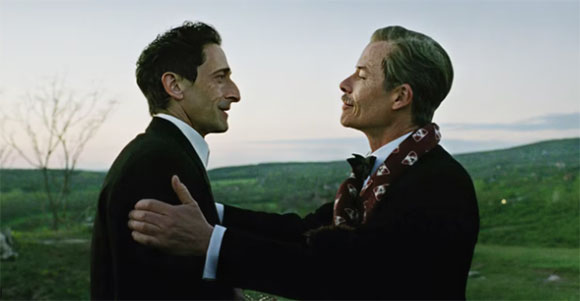
I did sympathize with the sensitive, customer-serving architect who gets abused by the self-serving, affluent client—in this case (spoiler alert), literal rape.

Architect and his insidious client, film still from The Brutalist, 2024

I liked and disliked The Brutalist. Though I found fault in the portrayal of Laszlo Toth as an architect, I supported much of his depiction: thoughtful, creative, and bold, but also self-absorbed, uncompromising, and egotistical. Best to sum it up as Fountainhead-syndrome.

© Poon Design Inc.