
#228: STYLE VS. NO STYLE
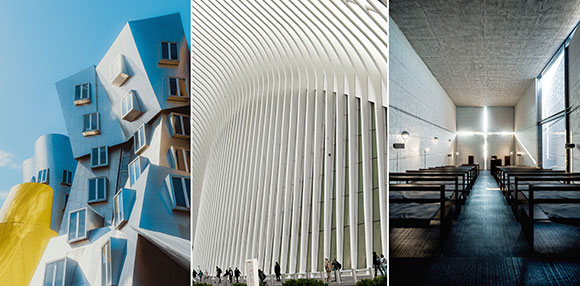
left: Computer Science and Artificial Intelligence Laboratory, Massachusetts Institute of Technology, Cambridge, Massachusetts, by Frank Gehry (photo by Meriç Dağlı on Unsplash); middle: The Oculus, World Trade Center Transportation Hub, New York, New York (photo by Reza Shokri on Pexels); right: The Church of the Light at Ibaraki Kasugaoka Church, Ibaraki, Osaka, Japan (photo from parametric-architecture.com)
Are you an architect that works on a signature vision, honing it year after year—resulting in a personal language like Frank Gehry, Santiago Calatrava, or Tadao Ando? Or do you claim, like many architects try, to have “no preconceived notions” of design?
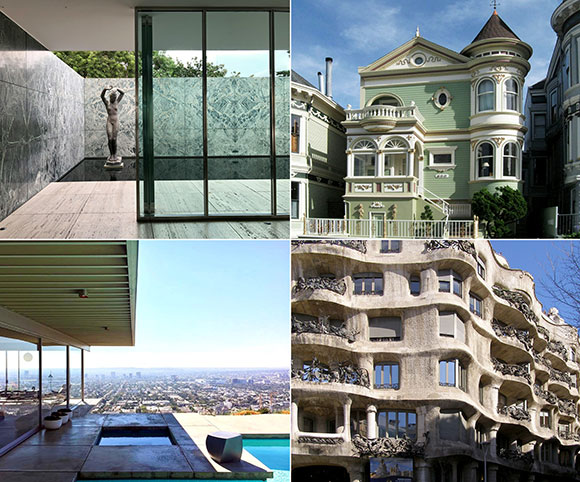
I see that trite phrase on so many architecture websites. Do you really have no ideas, personal interests, nor artistic ideas? Do you truly start each new project empty-headed? If this is true, then you as a democratic and diplomatic architect must be willing and skilled to work in any architectural style, from a Miesian glass box to an ornate Victorian mansion, from a Mid-Century Modern replica, to a Gaudi-esque sculptural work.
I posit that architects use the cliché of having “no preconceived notions” merely as a sales position, to sound like architecture is purely a client service and a problem solving endeavor—forgetting that architecture is also art. I believe that though most architects pretend to have no personal design style, quite the contrary, many architects have design agendas and processes in their psyche.
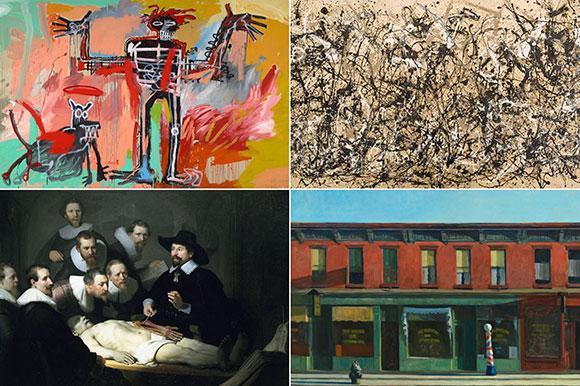

My favorite architects are like artists. Whether Basquiat or Pollock, Rembrandt or Hopper, an artist’s work is recognizable like a signature brand. Artists even have a labeled style within their style. Take for example Picasso’s well-known “Blue Period.” From 1901 to 1904, he explore a multitude of melancholic blue shades representing pain and poverty. So too are many architects—as artists—not willing to work in a range of styles, hence my argument that all architects actually have preconceived notions.
When starting a project, an architect with a known style has ground already covered, since a client has a basic idea of what a project might look and feel like. As a business model, a signature style might be more efficient to produce, as the architect iterates ideas within creative guardrails vs. the architect that starts at ground zero, all ideas viable for exploration.

Take Richard Meier for example: When time comes to select colors for the building, he works famously with white. He does not test earth tones vs. pastels vs. primary colors. This Pritzker-prized architect has developed a strong design language based simply on shades of white.
For those architects, whose projects look similar, they have a toolbox of ideas, most negatively called a template or formulaic. But there is nothing wrong with this if said toolbox contains groundbreaking exciting ideas, like many of our celebrated Starchitects. Consider for example the many art institutions, prestigious universities, and fancy corporations that have wanted the same Gehry-designed building.

On the other hand, for the architect that boasts no preconceived style and instead offers an open-ended creative process, the client may have many different options presented to them—even diametrically opposed like a Spanish Colonial Revival building vs. one inspired by Abstract Minimalism. Such architects go as far as to divide up their catalog of work with stylistic labels, when presented in a book or a website, e.g. “traditional” vs. “contemporary” vs. “transitional.” Would Gehry or Meier ever do this?
Whether you are an architect honing a personal style or one that starts with a blank canvas, or the many variations on the design spectrum, know your style, stay true to your process, and admit to who you are.
