Tag Archives: PROFIT

#226: HOW THE ARCHITECT IS PAID

June 26, 2026

(photo by Brett Hondow on Pixabay)

There are many ways an architect is compensated for design services. The three most common are:

1. Fixed fee,
2. Hourly rate, or
3. Percentage of the construction cost.

(photo by Annette on Pixabay)

1. FIXED FEE

A fixed fee, sometimes called flat fee or stipulated sum, is as simple as it sounds. To start, the architect considers things like:

– scope and complexity of the project,
– anticipated design process,
– number of meetings and changes,
– hours to produce drawings,
– past relevant projects and fees, and
– value of the design services and intellectual property.

Chaya Downtown, Los Angeles, California, by Poon Design (photo by Gregg Segal)

Then the architect comes up with a number, the fixed fee. Going forward, that fee does not change unless something changes. Minor changes like a restroom tile choice would probably not alter the fixed fee. But if a school goes from 10 classrooms to 15, or a restaurant adds an exterior dining patio, the architect will adjust the fee accordingly to accommodate the additional work.

For a client, knowing the fee upfront brings comfort. For the architect, there are benefits and risks. If the project is executed efficiently, the left over dollars is the profit. But if the project waffles back and forth, the architect loses money.

(photo by Pixabay)

2. HOURLY RATE

With an hourly rate, if an architect performs 100 hours of design time at $300/hour, for example, then the invoice will be for $30,000. As with an attorney, there might be concern with how the dollars might total up when all is said and done. Addressing this, a client can request a NTE (not-to-exceed) amount, but if a project’s scope is unclear, an architect will hesitate to cap the dollars and hours. With some projects, the scheduled 5 meetings can grow to 10 or 15, as an example. With an NTE, is it expected that the architect work for free?

From an architect’s standpoint, there is general financial security, because everything the architect does is compensated. But conversely, profit is limited. Even if the hourly rate is high, say $1,000 or $2,000 per hour, the amount earned is limited to the 24 hours in a day.

(photo by Fabian Blank on Unsplash)

3. PERCENTAGE OF CONSTRUCTION COST

The 10% fee structure is commonplace, though not always useful. With this rule of thumb, if a project’s construction costs $10 million, then the architect’s fee would be $1 million. But within the industry, the percentage can fall anywhere from 5% to 20%. For some projects, the percentage goes down as the project’s construction value increases.

If the percentage and construction budget are agreed upon at the start of the project, you essentially have negotiated a fixed fee. But for some public projects like a school, the client awaits the construction cost from the bidding phase, which is at the end of the design process. In this scenario, an architect works at risk, for years sometimes, with assumed fee numbers. If there is an economic downturn and the final construction cost is 20% less than anticipated, the architect’s fee will unfortunately be 20% less.
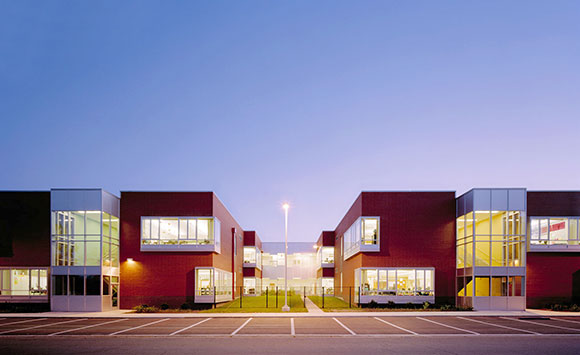
Greenman Elementary School, Aurora, Illinois, by Anthony Poon w/ A4E and Cordogan, Clark & Associates (photo by Mark Ballogg )

WRAPPING UP

From an architect’s perspective, proposing a fee can be a challenge. The architect has to anticipate the time and effort to complete a design. Sometimes a high-maintenance client will call ten times a day vs. a busy client that only has time to speak once a month.

When calculating a fee, the architect should assign value to the services, not simply add up hours. For example, if the design work generates big profits for a developer client, shouldn’t the architecture fee be valued higher? Once, a structural engineer colleague charged $10,000 more in fee than his competitors, but his unique foundation design save $100,000 in construction dollars.
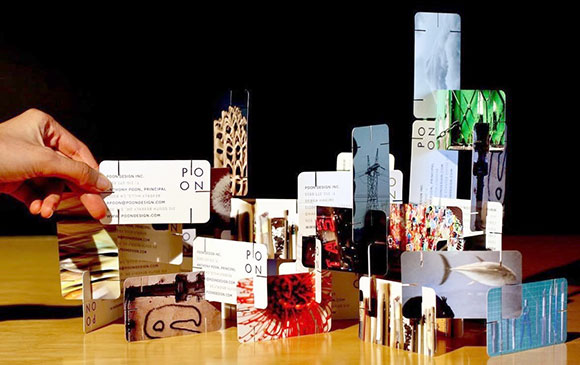
Business cards from Poon Design (photo by Anthony Poon)

Awhile back, a graphic design colleague created an exciting logo in 30 minutes. The client loved it, but wondered why he was to pay the fee which was based on a whole month of work. The designer responded, “You are not paying me for my 30 minutes. You are paying for my 30 years of experience that allowed me to create a great logo in 30 minutes!”

#219: FUEL FOR FIRE | CLIENTS AND PROJECTS

January 30, 2026

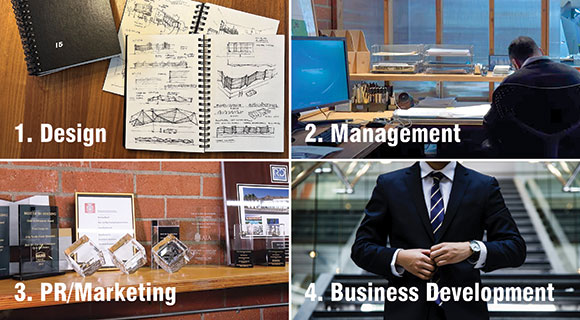
upper left: Anthony Poon’s sketchbooks (photo by Anthony Poon); upper right: Poon Design Inc. (photo by Grant Bozigian); lower left: Poon Design’s awards (photo by Grant Bozigian); lower right: closing the deal (photo by Hunters Race on Unsplash)

Within the many facets of the architectural profession, four distinct aspects stand out.

1) The most obvious aspect is design. No doubt, architecture is a creative endeavor.

2) As a business, next is management. The organization of projects, schedules, and staff is critical to business objectives like stability, growth, and profit.

3) PR is third. Marketing provides exposure and recognition.

4) The most important, arguably, is business development, as in obtaining clients and projects.

Whitefish River Run, Whitefish, Montana, by Poon Design (photo by Heidi Long)

Without projects, there is nothing to design. This is the critical thing: projects. Without fees from projects, there is nothing to manage and no profits. And without projects, there is nothing to show the world.

An architect can be the most talented designer in the industry, but without a project to design and client to serve, such skills are squandered. Sure, one can submit ideas to architectural competitions, or design speculatively hoping to be published or win an award, or maybe just for fun. But such activities make up a small percentage of work within architecture firms.

Budget and schedule tools (from Poon Design)

I have worked with a few business consultants over the years, as well as implemented various management software, such as Harper & Shuman, BQE, and Procore. Such resources assist in the oversight of projects, as in architect A worked X number of hours this month. Does that fit the allocated fee? Are we on schedule? Did we make a buck? But without a project, such powerful assets have little purpose. Such tools do not generate projects or bring in clients.

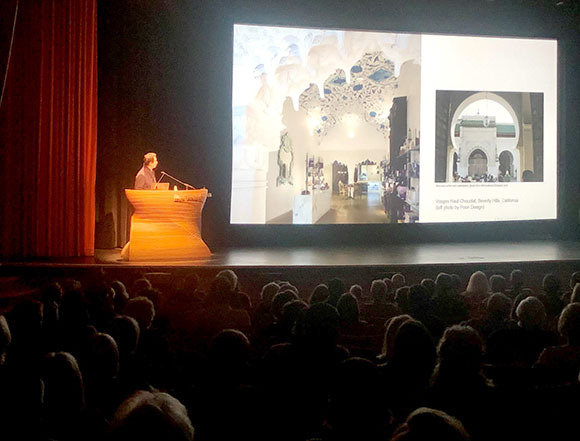
Anthony Poon speaks at Modernism Week 2023 (photo by Olive Stays)

To see one’s accomplishments in the media, it always excites. PR gets one’s name out there, shows off the work, maybe gets a speaking engagement, but in and of itself, PR is abstract, rarely landing a client in a one-to-one fashion. Most architects see PR as an end in itself—bragging rights as the reward.

(photo by Anthony Tyrrell on Unsplash)

So the sustenance of a firm, the food that fuels all activities from design to management to PR, is having clients (who pay on time) and projects (with good fees). The rest then falls into place.

Think of it this way. A company can always hire an office manager or CFO-type. For PR, an employee strong in marketing and social media might be able fill this role. Also, that company can hire one of the many PR firms out there. And companies are always shopping for design talent, whether the fresh young voice or the senior visionary. But it is rare to hire an employee that brings in projects, and the number of business development consultants are rare. And those in this space have limited success.

Meaning, the act of obtaining clients and projects should be the foundational purpose for business owners, entrepreneurial principals, and seasoned executives. Their success is critical to the company’s survival.

Car from Back to the Future, 1985 (photo by Anthony Poon)

Without clients and projects, it’s like trying to drive an automobile without gas. You may have the coolest car, you may know where you want to go for the three-day weekend, and you may have invited your friends to join But without gas, you are going nowhere.

© Poon Design Inc.