
#230: THE SECOND STUDIO PODCAST, PART 1 OF 4 | ARCHITECTURE SLOW, JAZZ FAST
A decade ago, colleagues David Lee and Marina Bourderonnet of FAME Architecture and Design, launched an ambitious project, The Second Studio. They describe this ever-expanding work—500 episodes and counting—as, “an explicit podcast about design, architecture, and the everyday. . . it features interviews with renowned professionals, guides to architecture, and thoughtful takes on all things design. The show is honest, humorous, and irreverent.” I was excited to be part of episode #517, presented here in four parts—edited for length and clarity.
David Lee: Here we go.
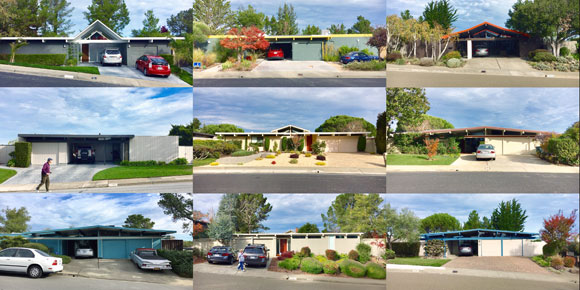
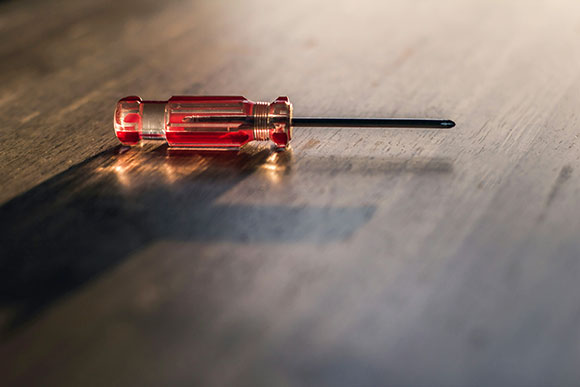
Anthony Poon: I was born in San Francisco Chinatown. And I think there was something about the density of that community that struck me—this kind of urbanism, physical closeness, buildings that span historic to contemporary. During high school, my family moved to Burlingame, one of the largest enclaves of Eichler homes. I was surrounded by these wonderful Mid-Century Modern masterpieces. Another interesting piece of my architectural background was my school, Mills High School. It was one of the first prefab schools. It was said that the school was on the cover of Time magazine with the statement that you could take apart the entire high school with a single screwdriver.
Marina Bourderonnet: What kind of screwdriver are we talking about here?
Anthony: A very big one. The structure was all prefab steel frame with prefab insulated wall panels.
David: No kidding!
Anthony: The school was a kit-o-parts, a neat backdrop that might have had something to do with me becoming an architect.
David: Did you go straight from high school to study architecture? Was this background enough to inform your decision with what you were going to do? Or did you have an uncle who was an architect?
Anthony: Well, the great response to that question is yes. I do have an uncle who is an architect, a distant relative by the name of I.M. Pei.
Marina: Wait, what?!
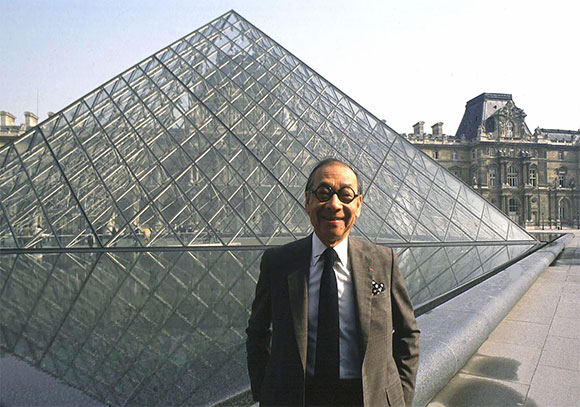
Anthony: He is related through a couple leaps, but yeah, a relative. I’ve only met him once. But back to your original part of the question. No, I didn’t jump into architecture. My passion was actually music. And you may know that having been to my studio and seeing the piano. I often write and talk about music, as well as the relationship of music to architecture. Music was my passion, but my Asian parents wanted me to pursue a profession, something that would provide security. Being a musician didn’t quite fit.
Architecture just fell in later. I liked drawing and painting. I liked making things. I took architecture classes at UC Berkeley, but continued my music education. Even much later when I considered grad schools, it was music versus architecture. But I think the decision was clear—that I could be an architect, run an architecture studio, and still play piano on the side, write music, even perform here and there, versus being a concert pianist and trying to run an architecture company on the side.
David: So the perception of the “architect” as a professional provided more stability in your parents’ eyes than being a musician?
Anthony: Isn’t that the irony though? In my parents’ eyes, yes. Architecture provided more stability, more than a musician at least. But as we know, the realities of that kind of security for an architect is much less than a number of other industries like law, dentistry, doctor, finance.
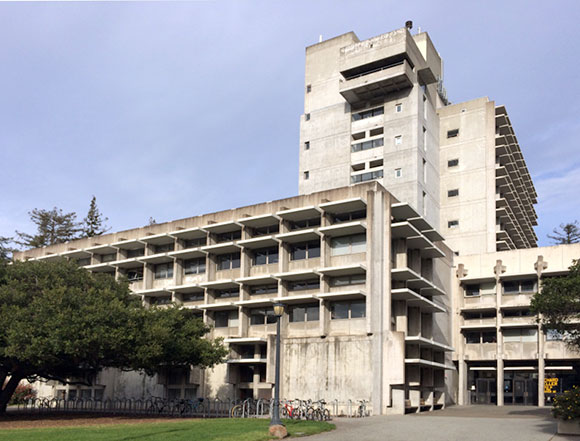
David: So when you went to Berkeley, was it firstly for music performance?
Anthony: It was for music composition, history, theory, and performance. I took music classes alongside my architecture major.
David: Was your time split like fifty-fifty between music and architecture?
Anthony: Yeah, I would go from the architecture studio to the music building. I would go into one of the music practice rooms and work on my music for hours, then back to the architecture building. It was an exciting back and forth: two different crowds. And that passion for both music and architecture continued even after I graduated college, as I mentioned, all the way up to deciding where I should apply for grad school. I specifically remember one night looking at both the application for Harvard’s Graduate School of Design and Julliard, trying to figure out where to go. And I picked, again with my parents’ voices in my head, Harvard. But even when there, my studies were still music-related. For example, my graduate thesis looked at how jazz music is made to see if I could apply those ideas to how architecture is made.
David: We have some parallels, because when I was in college studying architecture, I was also doing a lot of music. Your narrative about being in architecture studio, then going to the music practice room at night, and then back to architecture studio is one that I also lived through. It was enjoyable, but also really weird, because to your point, they’re completely different groups of people. It was strange to have each foot in two different universes. But that relationship between music and architecture—let’s talk about that.
Anthony: You probably know the famous quote from Goethe, that “architecture is frozen music.” There are all these overlaps of conceptual themes like harmony, rhythm, structure, and counterpoint. These things explain both music and architecture. But my interest was about the process. It wasn’t about designing buildings based on music. My interest was how music is made, and how architecture is made. And that’s where my interest in jazz comes into play.
Architecture is typically slow, tedious. There’s a lot of moving parts—technical aspects countered by creative aspects. There are budgets and schedules and details. A building can take forever to complete. But jazz music is spontaneous. It’s organic and impromptu. Can architecture be a little looser in its creative process?
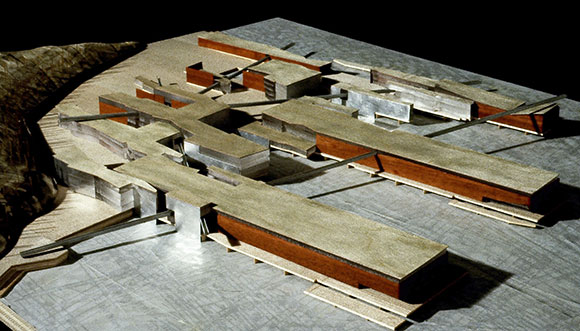
David: So what shape did your thesis take? Programmatically, what was it?
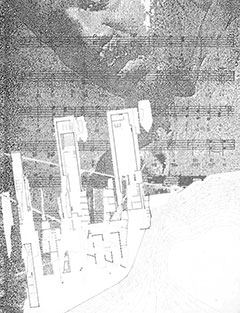
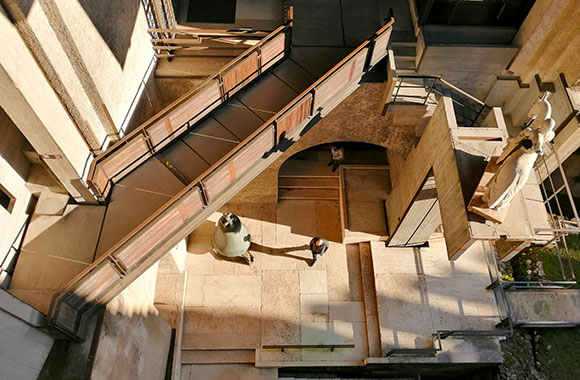
Anthony: It started as a large written document, a dissertation, studying all these ideas, looking at jazz musicians, reading jazz philosophy, applying it all to architectural theory. It led to the work of Carlos Scarpa, who I found to be a kind of architect that applied a jazz-like process. My final project was the transformation of San Francisco’s Fort Mason into a cultural center. The thesis is a bit abstract, a bit lengthy, but that’s sort of the gist of it.
David: Sometimes I feel what we do is quite serious, right? There’s professional liability. If we’re doing public structures, we have to think about the public’s safety. This causes the process to become more rigid and more restrained.
Anthony: I think it is just our training. In grad school, the word “rigor” was used throughout all our classes. It’s a great word. Architecture is a discipline. We have responsibility to the visitors of our buildings. But can’t we loosen up that creative process while still keeping an overall umbrella of rigor?
I worked in large corporate firms in the past. When they got a new project, architects right away grabbed their scales and started figuring out square footages, analyzing the technical aspects of the site and the budget, how it breaks down per square feet, per material, per division. The project was already locked into these kind of formulaic rules. There’s nothing too wrong with this in general, but there must be some other kind of approach, some other layer we can apply to make things, again, improvisational like jazz.
Marina: So do you ignore all of these logistical constraints and start from a freer approach—to understand what the project wants to be before diving into technicalities?
Anthony: There’s no way of ignoring the technicalities, because we know they are part of every project. No matter how we start, those things will come back to influence what we do, or maybe even haunt what we do. But I think the beginning can start sort of anywhere. It could be a group brainstorming where everyone just tosses out ideas and draws together. Maybe someone’s inspired by poetry or a piece of music. Everything in the very beginning has value to the creative process. And it doesn’t have to start with someone running calculations. Inspiration comes from everywhere. We should constantly be aware of this, so that we can grab at inspiration when it hits us.
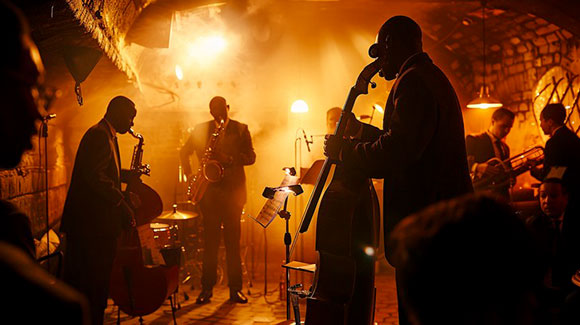
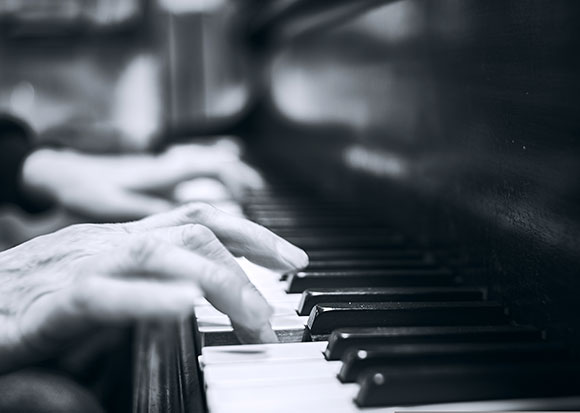
I think of a jazz concert I went to in Culver City many years ago at the Jazz Bakery. The musicians asked the audience to yell out numbers from one to seven, which represented the keys of a piano within the eight note octave. People did, and there resulted a sequence of random numbers. Then the pianist plucked out on the keyboard these random half dozen numbers, and kept repeating it. Soon the other musicians jumped in, a chord structure was added. Then rhythm. Then more and more. This piece of music was a full-blown original piece of improvisational jazz genius.
Marina: That’s pretty cool. So you can ask clients at the first meeting to just throw out a bunch of numbers?
David: It’s kind of similar. The information we get from clients is not as random as an audience member throwing out numbers, but we are hit with a bunch of information that we have to synthesize to create something hopefully poetic. But it is really easy to get trapped. I’ve been in offices and seen exactly what you’re describing. There’s people with their calculators and their scales, or their Revit files and they just click, click, click on the mouse. Then suddenly it’s like, “Oh, I guess we’re done with this phase of work.”
Anthony: Yeah, exactly.
(Part 2 of 4 coming soon.)
