Tag Archives: FAIA

#213: AN INTERVIEW WITH VOYAGE LA

October 17, 2025

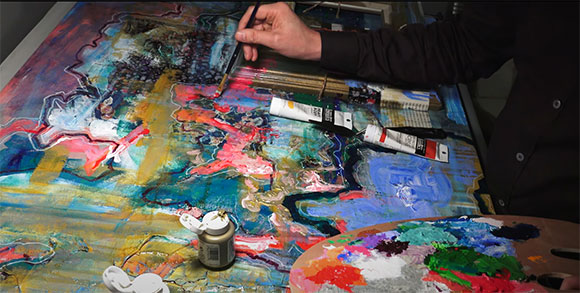
In progress, Anthony Poon (photo by Grant Bozigian)

VoyageLA, the flagship publication of the Voyage Group of Magazines, takes a fresh approach to media, within multiple cities across the country. With stories on artists, entrepreneurs, underdogs, and risk takers, VoyageLA states, “We respect people and organizations that take the path less traveled.” Below are edited and abridged excerpts from my interview with VoyageLA.

VoyageLA splash page

VoyageLA: Hi Anthony, it’s an honor to have you on the platform. Thanks for taking the time to share your story with us – to start maybe you can share some of your backstory with our readers? How you started and how you got to where you are today?

Anthony Poon: At age five, I created my first large scale work of art. As my mother prepared a meal in the kitchen, I grabbed my crayons and drew a landscape mural on the large wall that went up our staircase. This ambitious work from a young eager artist was completed in 20 minutes. My parents did not know whether to scold me for vandalism or praise me for an impressive burst of creativity.
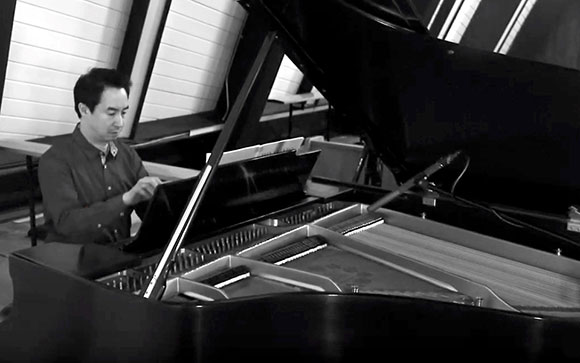
St. Paul’s Lutheran Church, Rancho Palos Verdes, California (photo by Grant Bozigian)

I graduated from college with a Bachelor of Arts in architecture and a secondary emphasis in music, and relocated to New York City, living in Chelsea—then a mostly abandoned part of town, now one of the centers of the universe. Life doesn’t offer us very many stark choices. But decades ago, one very late night in my cramped studio apartment, I faced such a choice. I clenched two graduate school applications: one for The Juilliard School of Music and the other for Harvard University’s Graduate School of Design. I had to decide which of my passions would eventually become my vocation: music vs. architecture
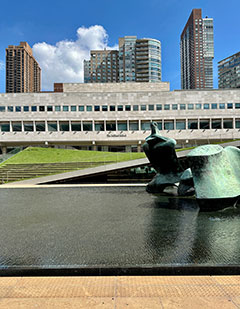
The Julliard School, New York, New York (photo by Anthony Poon)

Music was my first passion. Since age 6, my goal was to be a world-class concert pianist. I spent years and years practicing piano, composing music, studying composers, and performing recitals. When I put pen to paper, it was often to mark notes, chords, melodies, and harmonies. I wanted to play for the world.

I was also one of those kids drawn to Legos. I created cars, planes, robots, and of course, buildings. As I grew older, my visions for physical structures were captured in pencil, in paint, clay, cardboard, in any form of material I could get my hands on. I dreamed of places for people to live, to grow, to fall in love, and to find meaning in their existence. I sculpted worlds of peace and progress. Of intention. I wanted to shape the world.

(photo by Xavi Cabrera on Unsplash)

On that night in 1987, I had to choose.

I pondered how many famous pianists I could name, I could only come up with a short list: Rubenstein, Horowitz, Serkin, and just a few more. The odds of my making that short list seemed slim. Yet there are hundreds of successful architects in every city. I figured that I could be a practicing architect and still practice music. But not the other way around. I could not be a concert pianist and also lead an architecture firm.

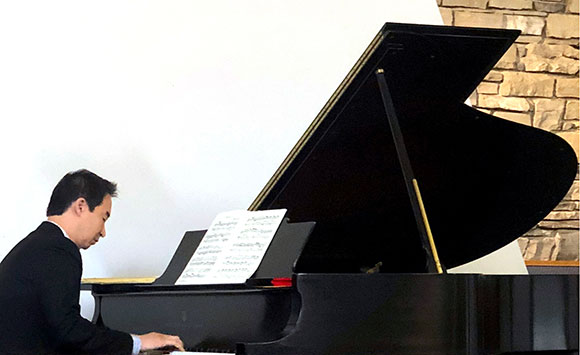
And so I chose architecture. I still play the piano nearly every day, whether it is a small bit of Brahms and Bach, or Rodgers and Hammerstein for my daughters to sing and dance. My choice of one passion didn’t negate the other. Indeed, the passion not chosen continues to inform the other.
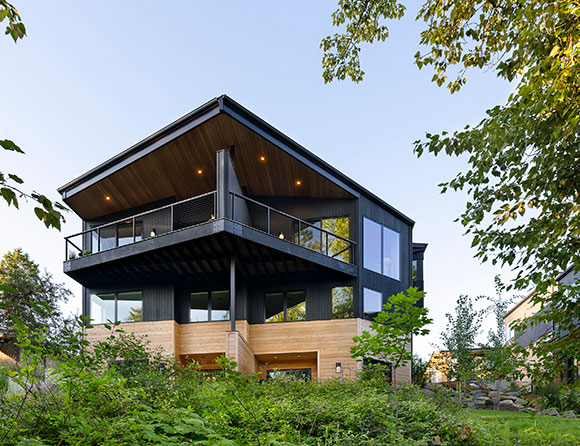
Whitefish River Run, Whitefish, Montana, by Poon Design (photo by Heidi Long)

VoyageLA: Would you say it’s been a smooth road, and if not what are some of the biggest challenges you’ve faced along the way?

Anthony: As an architect, author, artist, and musician—as an individual madly driven to create—the road is more akin to a roller coaster than that of a smoothly paved freeway. Besides the obvious struggles to have an income and sustain an authentic life of artistry, challenges also come from finding meaning and essence in the work, being recognized for my pursuits, wondering if I am truly talented, competition in the space, and not just finding one’s voice, but one’s audience.
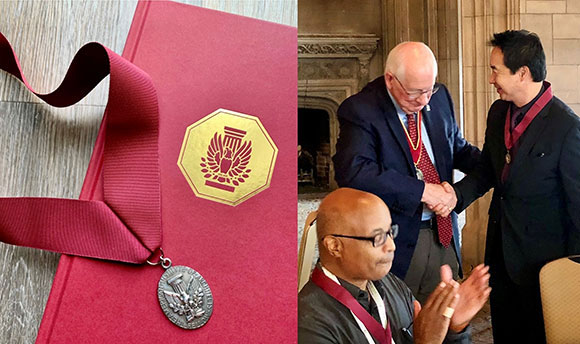
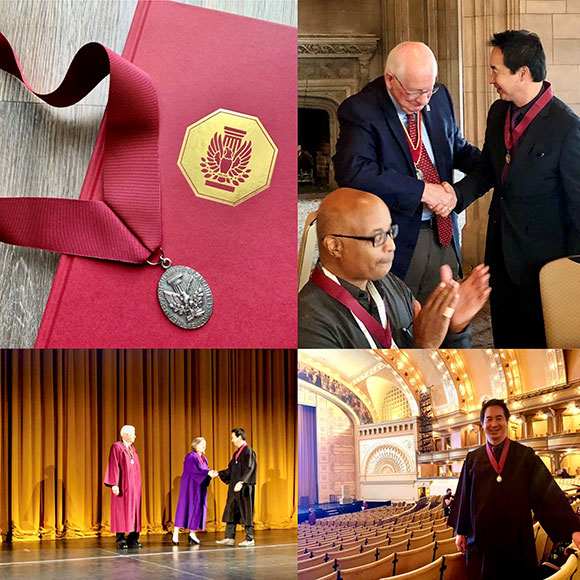
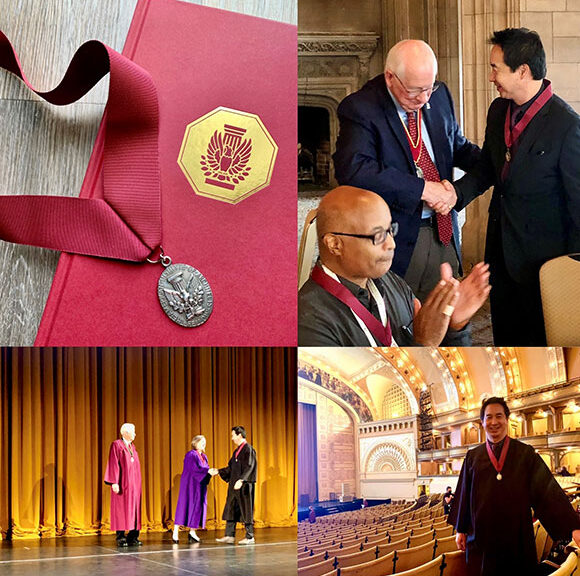
FAIA induction ceremony, The American Institute of Architects convention, Chicago, Illinois (photo by Olive Stays)

VoyageLA: Can you tell our readers more about what you do? What are you most proud of?

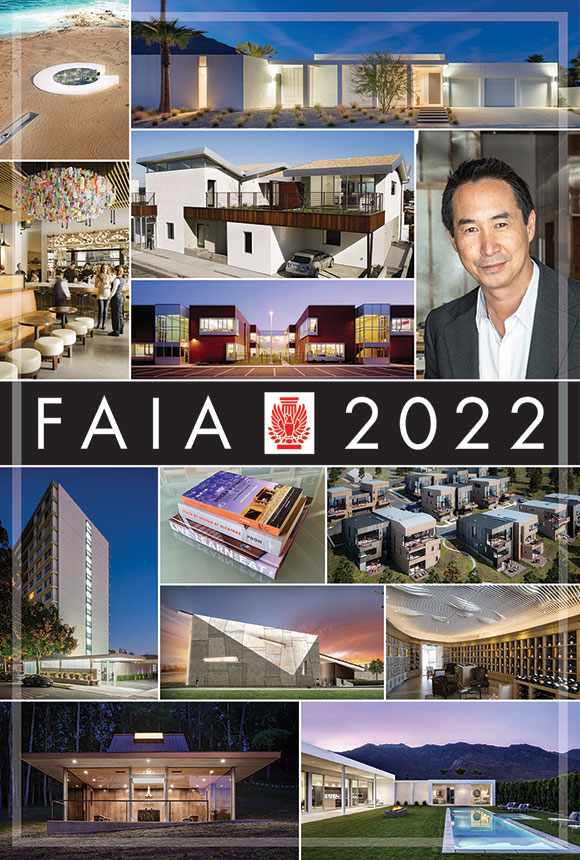
Anthony: As an architect, one of my greatest achievements took place at the 2022 national AIA convention in Chicago, where I was admitted into the prestigious College of Fellows of the American Institute of Architects, with President Obama as keynote speaker. The FAIA medal represents “exceptional contributions to architecture and society nationally”—an honor bestowed on less than 3% of the national industry.

As an author, my published books and articles provide me a platform to voice my artistic spirit. Of all my writings, I am most proud of my debut 2022 novel, Death by Design at Alcatraz, an architectural thriller examining ego and arrogance within the creative process. Having adapted my story to a screenplay called Death by Architecture, Scriptapalooza 2025 recently honored my work in their Top 30 best scripts out of over 4,000 international projects.
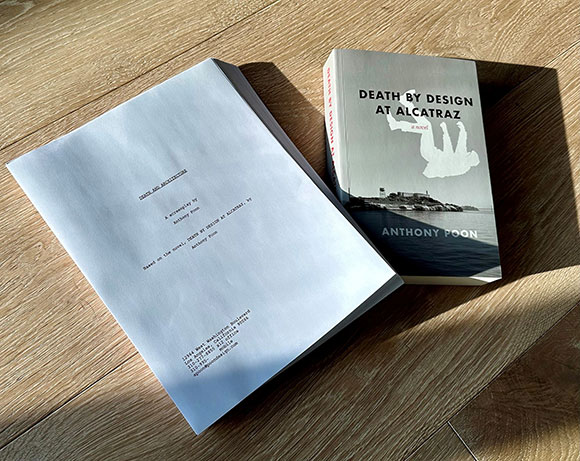
Death by Architecture (screenplay), 2025 and Death by Design at Alcatraz (novel), 2021, by Anthony Poon (photo by Anthony Poon)

VoyageLA: If we knew you growing up, how would we have described you?

Anthony: I like to stay busy. I have many interests, hobbies, and fields of pursuit. I paint, photograph, collage, and sculpt. I play the piano and once in a while compose music. I write essays, publishing here and there. I even scrapbook, garden, tie dye, and make furniture.
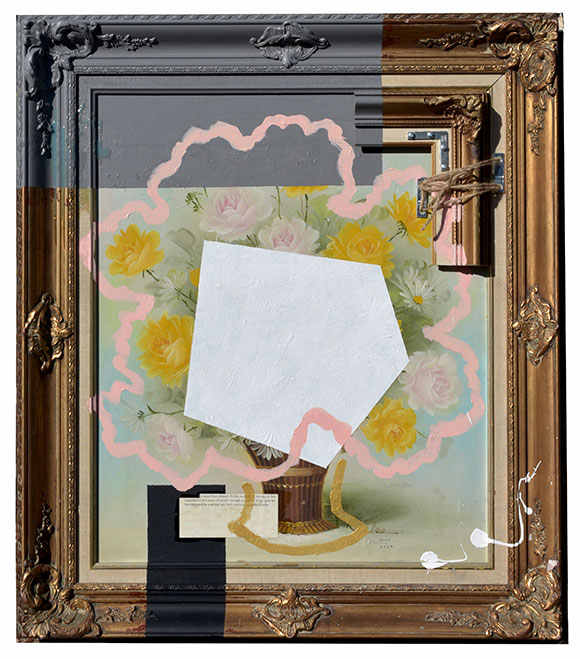
Melrose Pink, 27 ½” x 32”, July 2025, by Anthony Poon

Podcaster Josh Cooperman once asked, “Of your various activities, what creative pursuits do you like best?”

(photo by Mikel Healey)

Akin to the challenges of identifying one’s favorite rock band or flavor of ice cream, there is no reasonable answer. Do I like playing a Beethoven piano sonata more than writing a position article on the design industry? Do I enjoy working on a large mixed-media art piece more than designing a Buddhist temple?

I don’t see any such exercises as independent from each other. Artistic endeavors are not discrete. All my investigations, experiments, and yes, failures too, fall under the shelter of a single umbrella, a simultaneous effort—that of a creative voyage with no starting point and excitingly, no end in sight.

When one plant species pollinates another, the cross pollination creates new varieties of plant life. So too should all forms of artistic study and all mediums of imagination and expression. Music, painting, writing, architecture, and so on. For me, it is all one artistic gesture—interconnected, intertwined, inseparable.


#185: WHAT IS ARCHITECTURAL SUCCESS?

April 5, 2024

Lincoln Studios, Santa Monica, California, by Poon Design (photo by Gregg Segal)

As an architect, are you successful? How should we measure success?

(photo by SK on Pixabay)

Making money is an obvious gauge, but there’s more to life than a paycheck.

Good design should count for something, but design is subjective. So success might look towards an architect’s accolades, like design awards and national honors. But there must be more than bragging rights and industry fanfare.

FAIA Investiture Ceremony, 2022 AIA National Conference, Chicago, Illinois (photos by Olive Stays and Poon Design)

We architects enjoy seeing our name in the headlines, as well as photographs of our work gracing magazine covers and online features. But is this the result of being a successful architect or having a good PR agent?

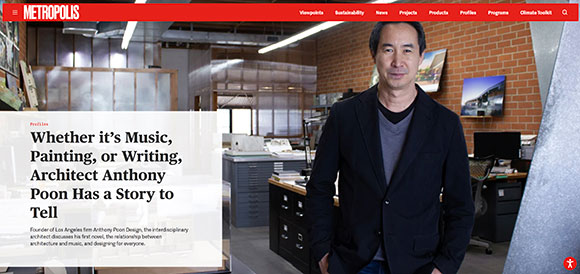
Feature profile on Metropolis (photo by Grant Bozigian)

A portfolio with depth—with projects big and small, local and national—is surely a critical marker of success. Victory might also be evaluated on one’s international projects, evidence of a world traveling architect who jets off to yet another country in demand.

(photo by Sasin Tipchai on Pixabay)

Often, the success of an architect is simply having a happy client. And the more clients, the more successful this architect must be. How many new clients did you close this year? But keep in mind that quantity isn’t quality

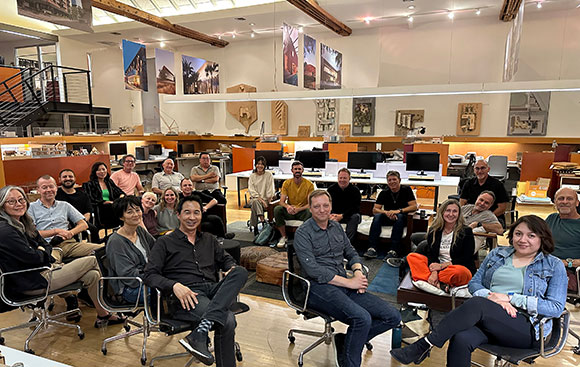
Design Roundtable, founded by Anthony Poon, at EYRC, Los Angeles, California (photo by Design Roundtable)

Success should come from both collaboration and being part of a team, as well as leadership and managing a team. One’s contributions to the industry should count for something, whether a thought-leader, teacher, community service advocate, or respected professional.

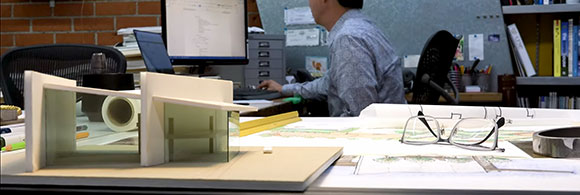
Poon Design Inc., Los Angeles, California (photo by Anthony Poon)

Perhaps, success is identified with the entrepreneurial path, being one’s own boss, having one’s name on the door, and having 10 employees or maybe 100. Or success can be within a corporation with an architect reaching the top of the company ladder, being named partner. Or perhaps doing either quietly under the radar without the need for the spotlight of conceit is worthwhile.

Poon Design Inc., Los Angeles, California (photo by Grant Bozigian)

As a struggling (starving) artist, can an architect be successful? Being part of a creative journey, searching one’s soul for answers, or mining the world for abstract ideas—such ambitious endeavors might be a measure of success regardless of the outcome.

For many, success in architecture comprises the simple things: being challenged and learning new skills.

Poon Design Inc., Los Angeles, California (photo by Grant Bozigian)

Happiness is often one of the more authentic measures of success. I believe most architects are happiest when getting to design, to be creative, to think back to how as a child, they could build things with Lego. It is about being part of open-ended travel through an existence of glorious ideas and imaginative designs, and then seeing such a vision come to fruition.

(photo by StockSnap on Pixabay)

#155: WHETHER IT’S MUSIC, PAINTING, OR WRITING, ARCHITECT ANTHONY POON HAS A STORY TO TELL

July 15, 2022

“The interdisciplinary architect discusses his first novel, the relationship between architecture and music, and designing for everyone. Anthony Poon has a story to tell. Actually, he has many stories to tell—some in written form, others in the language of architecture, music, or painting.” So writes journalist Brian Libby for a recent article in Metropolis. Below are edited and abridged excerpts.

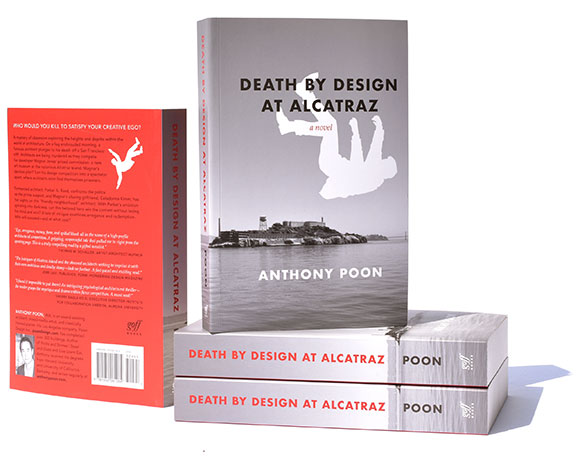
Death by Design at Alcatraz, by Anthony Poon, published by Goff Books, 2022

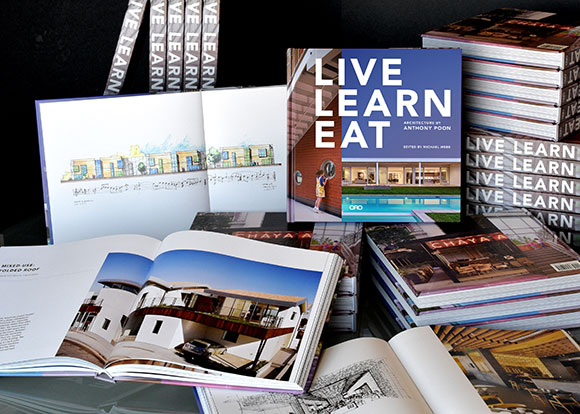
Brian Libby: Poon Design Inc. has completed over 300 projects, as chronicled in the 2020 book Live Learn Eat: Architecture by Anthony Poon. Earlier this year he was named to the American Institute of Architects’ College of Fellows, following national awards for educational, residential and restaurant designs. He’s also a certified Feng Shui practitioner, and recently released his debut mystery novel Death by Design at Alcatraz. Yet books are just one of Poon’s passions. He’s also a mixed-media artist and with a master’s degree in architecture. Poon trained even longer—from the age of six—to be a concert pianist. In 1987, after earning a magna cum laude in architecture and music from the University of California Berkeley, he had to decide between applying to The Julliard School and Harvard University’s Graduate School of Design, ultimately choosing the latter.”

Live Learn Eat: Architecture by Anthony Poon, edited by Michael Webb, published by ORO Editions, 2020

The question of rigid composition versus improvising relates to being a pianist. Could you talk about that?

Anthony Poon: Growing up, my training was classical music. It’s this process of aiming for perfection, a flawless performance. Playing a piano sonata—there are a hundred thousand notes, and you’ve got to hit them all correctly. If I got one note off, my piano teacher would say, “That whole performance is ruined.” But I got interested in something beyond technical proficiency. You’ve got to be able to add a voice, a story. I eventually learned about jazz. It blew my mind that these pianists would just sit at the keyboard and make things up.

Anthony Poon at Ranchos Palos Verdes, California (photo by Olive Stays)

Brian: Your thesis at Harvard was about how jazz improvisation informs the architecture process. What did you learn?

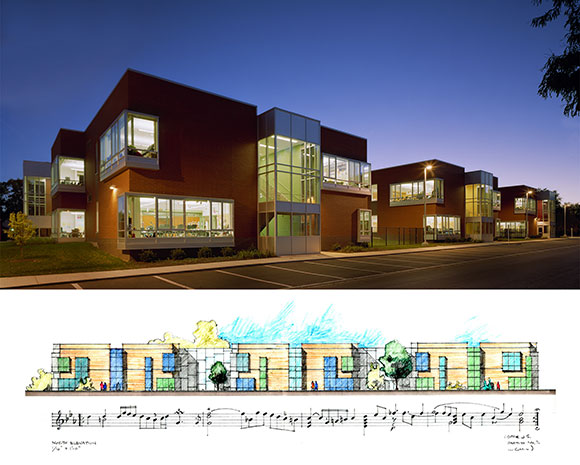
Anthony: Architecture is very methodical. It takes a long time to produce a building. There are a lot of practical considerations: code, budget, square footage. You can’t just whip out a building the way a jazz musician would whip out music. But in the creative process, I always wonder: Why can’t we just grab colors and make an idea? Why can’t we have this sort of jazz-like conversation bouncing ideas and simply grab at this and that, and make it the basis of an entire building design, whether it’s a library, museum, or house?

Greenman Elementary School, Aurora, Illinois, by Anthony Poon, A4E, and Cordogan, Clark & Associates (photo by Mark Ballogg)

Brian: Let’s go back to this question of architecture and narrative. Could you talk about the importance of storytelling in design?

Anthony: It’s all about communication. Everything that I do––painting, music, writing, architecture––is all a language. In architecture, we look to our clients—who they are and what they are—to craft a story. If it’s a family, we want to know how they celebrate the holidays, if the in-laws stay with them, whether they have dogs. For designing a school, we ask: How do the teachers teach, how do the students learn? With an office: what’s the corporate culture, what’s the mission statement? When we do a religious project, there is an entire set of beliefs that need to be expressed in architecture. What’s exciting about music and architecture, and what makes them different from writing, is that they are abstract. It’s kind of open-ended communication.

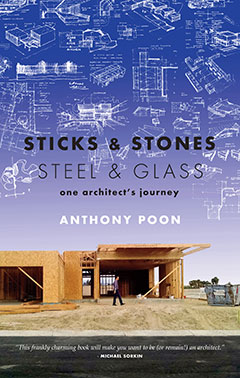
Sticks and Stones | Steel and Glass: One Architect’s Journey, published by Unbridled Books, 2017

Brian: In your memoir, Sticks & Stones | Steel & Glass: One Architect’s Journey, you write about designing intimate spaces for people.

Anthony: What we talk about at my firm is that good design belongs to everyone. It could be a restaurant or the design of a bench—corporate headquarters or a public school. It’s about harnessing the talents that my team brings, and then reaching as many people as possible.

Brian: Where do you stand on the introvert-extrovert scale? Because architecture, especially when you get to a certain scale, is teamwork. Painting, which you’re also acclaimed for, is a more solitary activity.

Anthony: I’m probably somewhere in the middle but skewing a little towards the extrovert side. Some of these art forms are solo explorations, but I don’t see the art being complete until it reaches the audience. That’s the completion of the artistic arc. With any kind of artist, both introversion and extroversion are tapped. In architecture, for example, the introverted, introspective, self-examining qualities usually launch the design process, and the extroverted side leads a team, sells the idea to a client, and supports the creative ego.

top: Alleyway, 30” x 42”, 2019; bottom left: Melrose Brown, 23” x 27”, 2021; bottom right: Feeling Orange, 20” x 24”, 2019

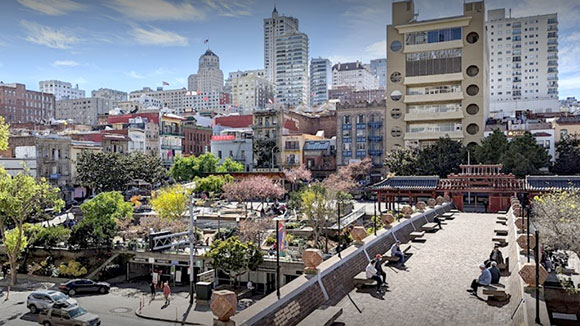
Brian: In Sticks & Stones | Steel & Glass, you described how San Francisco’s Portsmouth Square in Chinatown inspired you. The park dates to 1833, but its 1963 redesign was derided at the time for raising the park to fit a parking garage underneath. What made it special to you and the community?

Anthony: Isn’t it incredible that it is a parking structure and an extraordinary park? The plaza acts like a blank canvas, and the community paints their life onto this canvas. It’s just that kind of wonderful, idyllic place that you don’t imagine would be in such a dense area. I look at Portsmouth Square, not as an architect fetishizing its design, but as what it offers to the community: to have a Tai Chi class at 5:00 in the morning, a wedding at noon, and kids running around in all day. That’s the power of architecture.

Portsmouth Square, Chinatown, San Francisco, California (photo by Bert Brautigam)
© Poon Design Inc.