Tag Archives: DILLER SCOFIDIO + RENFRO

#218: THE MOST BEWITCHING BUILDINGS OF 2025
January 9, 2026

(photo from ArchDaily)

Once again, it is time for me to highlight ten works of architecture that caught my eye last year—bewitched my design sensibilities. There are many more than just ten projects that deserve recognition, but such is life in an industry of subjective creativity.

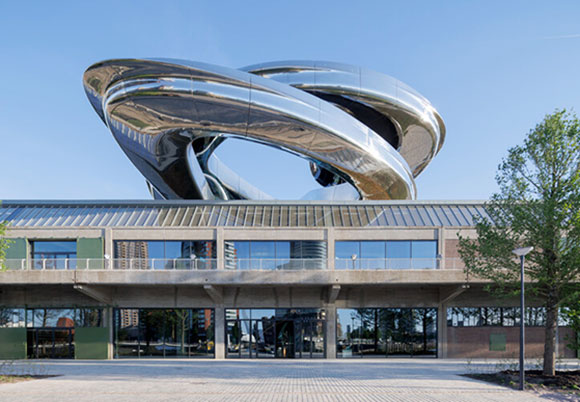
1: For the Fenix Museum of Migration in Rotterdam, a renovation of a century-old warehouse receives an iconic double-helix staircase. Entitled The Tornado, this stainless steel feature spirals up through the two levels of the warehouse, then bursts through the roof reaching for the sky—a metaphor for the journey of migration. By MAD Architects, the 160,000-square-foot museum exhibits artifacts telling the story of migration around the globe, past and present.
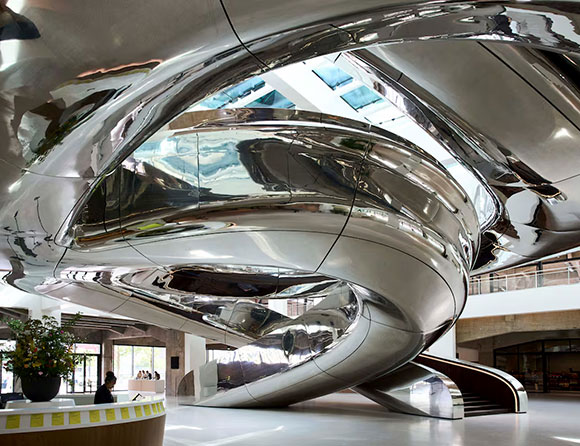
(phot by AP Photo/Peter Dejong)

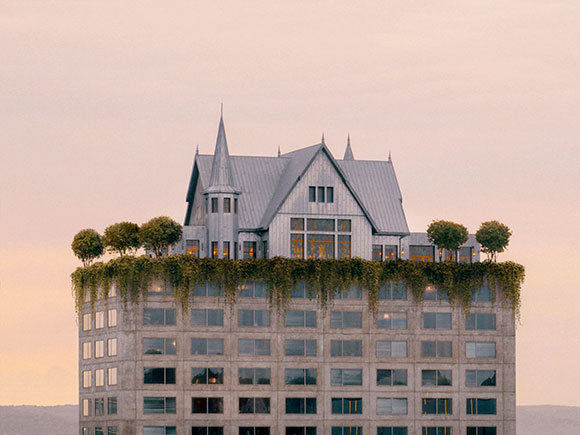
2: Architect Philippe Starck proclaims, “Maison Heler was born of a surreal, poetic tale I imagined. It is a hotel conceived as a habitable work of art, a literary principle crystallized in matter.” A dream-like, whimsical “mansion” tops off this nine-story, 104-room Maison Heler hotel, located in Metz, France. Entirely wrapped in standing seam metal panels, the rooftop replica of a 19th century house comprises a restaurant and bar, standing in stark (Starck?) contrast to the aggressively and intentionally dull hotel beneath.
(photo from starck.com)

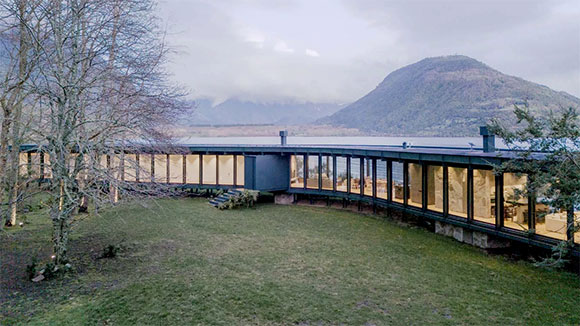
3: The Lago Ranco Retreat by Hevia Poblete Arquitectos curves its thin linear form just slightly, sweeping gently through the landscape, welcoming in panoramic views. In Chile, this 3,000-square-foot, five-bedroom, getaway home on a lake comprises a modular steel exoskeleton. Excessively repetitive, the exact architectural/structural section repeats itself three dozen times.
(photo by Marcos Zegers)

4: With Big Red Crayfish, architect Dayi Design created an addition/renovation with a visually stunning juxtaposition of old and new, backdrop and accent, gray/white and Chinese red. At this historic complex on the banks of Nanjing’s Qinhuai River, a steel ribbon of red stairs and paths weave up and down, in and out, through and around, knitting together several commercial structures.
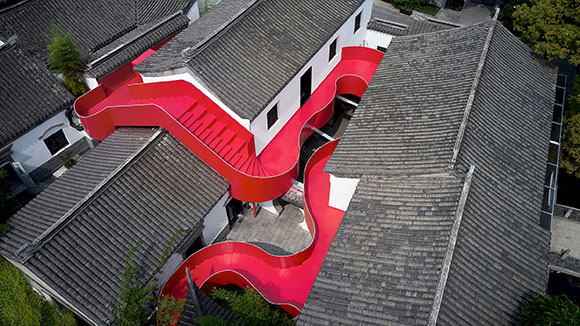
(photo from architizer.com)

5: In Pepingen, Belgium, a triangular courtyard carves into an existing farmhouse, delivering light and air to this traditional barn. Double-height spaces and split-level areas surrounding this aggressive cutout. Entitled Lyco House by architect OYO, much of the original structure remains to display a conversation between the past and the future. The design is an intervention where more is added through subtracting.
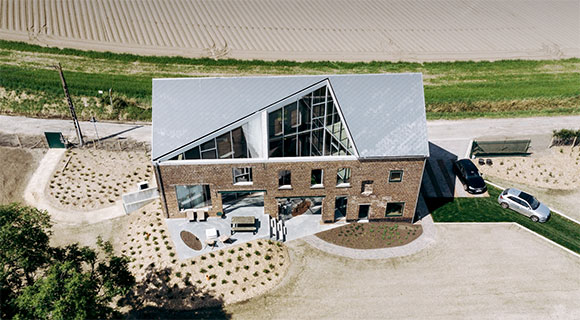
(photo by Karen Van der Biest)

6: The first of its kind in the Muslim world, the Al-Mujadilah Center and Mosque for Women, Qatar, provides 50,000 square feet of educational, worship, and community spaces, to include classrooms, courtyards, event areas, and a prayer hall. Designed by Diller Scofidio + Renfro, the roof with its 5,000 light wells sits both boldy and gently in the cityscape like a slightly folded piece of paper and provides a landmark presence. The concept of bringing together many diverse activities and interests “under one roof” has literally been accomplished.
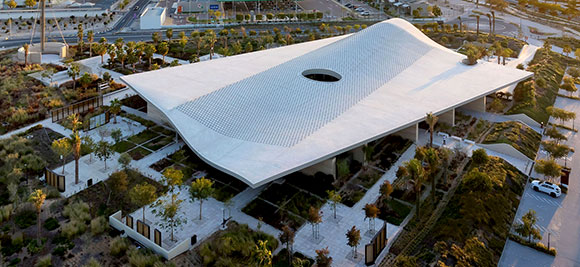
(photo by Iwan Baan)

7: A modest 4,700-square-foot project by Atelier Xi can say a lot about nature, sustainability, and sheltering into the earth. In Shenzhen, China, the steel pavilions of the Qiaochengbei Park Visitor Center weather, show a wabi-sabi patina that unifies this modest village. With minimal disturbance to the landscape, building forms wind around existing trees. Living roofs tell the earth to receive the structures gracefully into the 16.5-acre park.
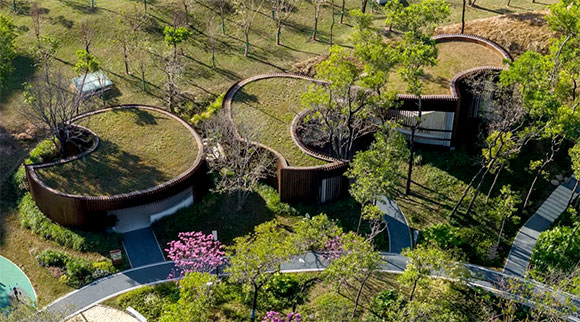
(photo by Zhang Chao)

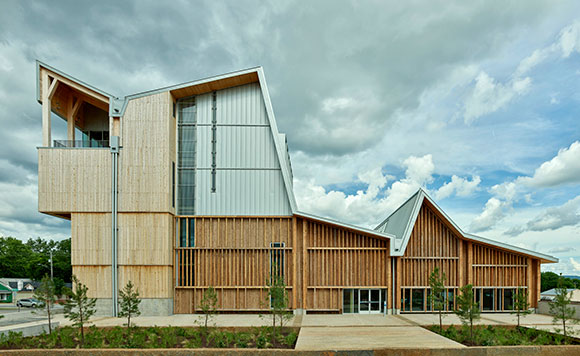
8: Supporting the building’s timber design innovation degree program at the University of Arkansas, Grafton Architects exploits mass-timber construction to its fullest. The Anthony Timberlands Center for Design and Materials Innovation in Fayetteville houses 45,000 square feet of education around design-building and research in wood, digital fabrication/prototyping, and a materials research division. Though the roof angles may appear arbitrary, like an architect inscribing his signature, the slopes and heights are driven by the activities within.
(photo by Timothy Hursley)

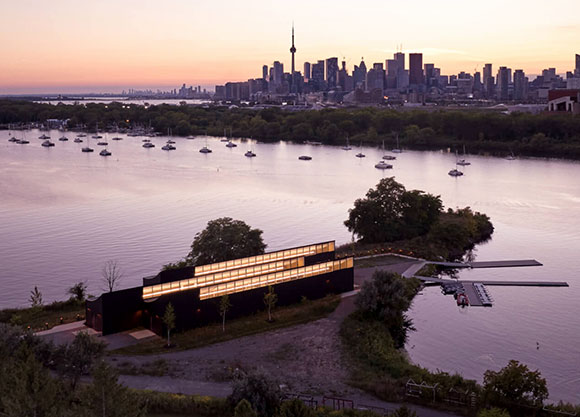
9: Inspired by the lines of racing boats, the 9,400-square-foot Lindsay Boathouse is modest and minimal, yet expressive . Architects VJAA shifts and slides three rectilinear masses—two storing the boats and one containing the gym and office. Employing low carbon, cross laminated timber and expansive bird safe glazing, this passively heated and cooled structure takes in views of the lake with Toronto’s skyline in the background.
(photo by Doublespace Photography)

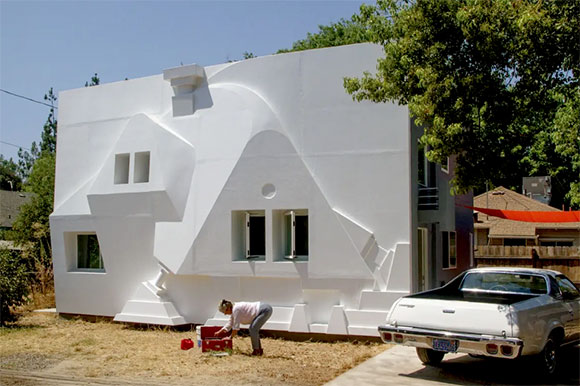
10: With a shoestring budget of $150,000 and modest building footprint of 900 square feet, architect/builder Ben Pennell created an eccentric and bizarre duplex residence at 210 Semple Street, Modesto, California. The sculptural façade employed CNC-cut plywood forms and a white gel-coat applied to fiberglass cloth. During the creation of this surreal work that calls upon the Grotesque, Pennell comments on “the asphyxiating burdens of this intolerably capitalistic existence.”
(photo by Ben Pennell)

For past years’ “top ten,” visit 2019, 2020, 2021, 2022, 2023, and 2024. Or see my all-time 15 favorite buildings. Check out my favorite projects in Los Angeles and around Los Angeles. Lastly, my favorite architects living and from the past.

#172: A DAY AND A HALF IN NEW YORK CITY

July 7, 2023

Lobby of 130 William Street (photo by Anthony Poon)

Having wrapped up client meetings in New York City, I had some time to myself. With nothing on the agenda, no one to meet, not much in particular to do, I put on walking shoes to wander this island of Manhattan (here and here). In a day and a half, I visited 20 new architectural works, walking 44,631 steps. Doing the math, that is nearly 20 miles.

THURSDAY

Midtown 

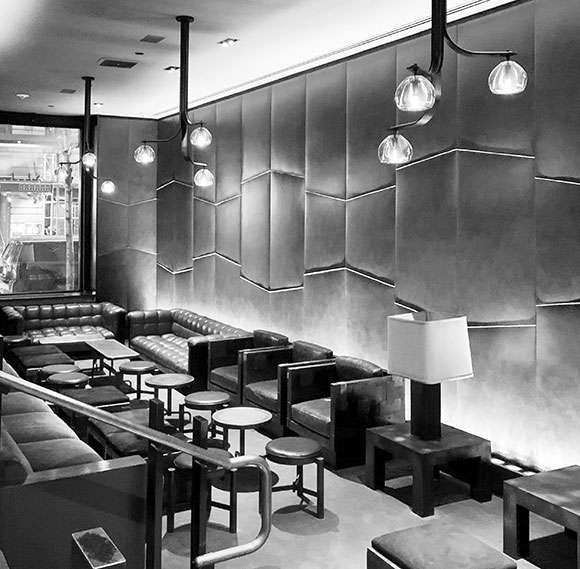
Royalton Hotel lobby, 44 West 44th Street (photo by Anthony Poon)

11:30 a.m.: I launched from my Times Square hotel, Philippe Starck’s acclaimed Royalton hotel. In the 1980s, Starck renovated this 1898 hotel, his first hotel re-envisioning. This stylish, irreverent renovation propelled Starck onto the global stage of design. Today, some of the ideas have become questionable, e.g., no mirror directly over the bathroom sink?

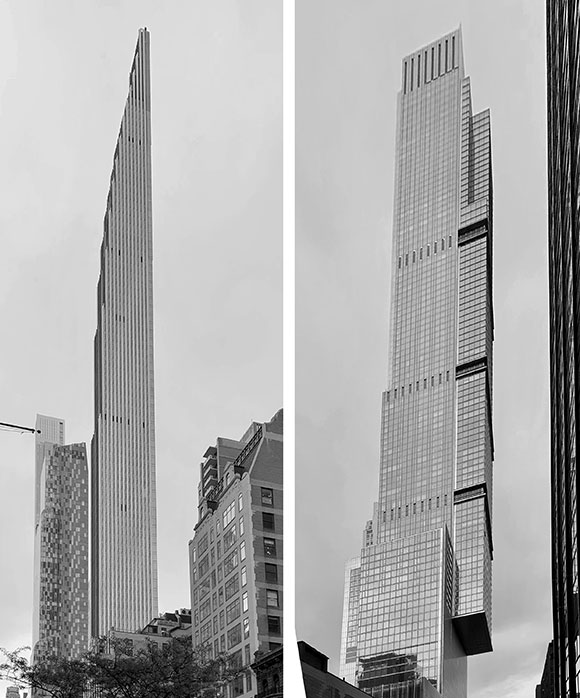
Left: Steinway Tower, 111 West 57th Street; right: Central Park Tower, 225 West 57th Street (photos by Anthony Poon)

11:52 a.m..: The Steinway Tower displayed optimism and technological/construction advancement, earning the title, the “World’s Skinniest Skyscraper,” designed by SHoP Architects.

12:12 p.m.: Within the famed “Billionaire’s Row” and its collection of “Supertalls,” the Central Park Tower cantilevered (somewhat awkwardly) building masses to grab views of Central Park. Architect AS+GG offered the tallest residential tower in the world, also the 15th tallest building in the world.

American Kennel Club Museum of the Dog, 101 Park Avenue (photo by Anthony Poon)

12:25 p.m.: How could I not stop into this random find, the Museum of the Dog? I toured an extensive collection of dog-related art, from paintings of presidents’ dogs to porcelain dog statuettes, from an exhibit on the history of the leash to the comprehensive library of books on dogs.

550 Madison Avenue (photo by Anthony Poon)

2:02 p.m.: Formerly the AT&T Building completed in 1984, Philip Johnson’s design with its infamous Chippendale crown received both Post-Modernist acclaim and the worst of ridicule. Last year, Norwegian Snohetta offered this new public garden, a wonderful oasis tucked into dense urbanity.

KAWS, 280 Park Avenue (photo by Anthony Poon)

2:29 p.m.: Artist Brian Donnelly, also known as the popular KAWS, blurs fine art and corporate art. Inside this generic corporate lobby, Donnelly installed a work of surrealism and wackiness.

MoMA, 11 West 53rd Street (photo by Anthony Poon)

4:31 p.m.: Yoshio Taniguchi’s 2004 redesign of MoMA mined the complexity of many levels, galleries, security points, and city facades to provide a coherently, exquisitely tailored museum.

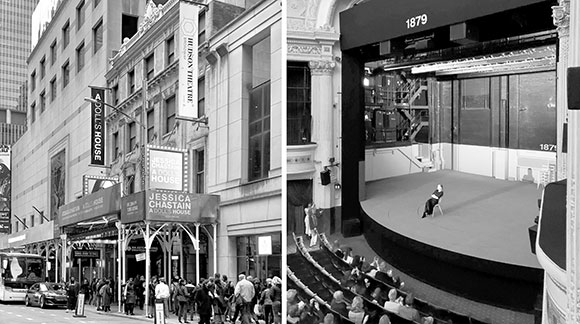
Hudson Theatre, 141 West 44th Street (photos by Anthony Poon)

7:09 p.m.: “When in Rome…” as the saying goes. I visited Times Square’s Hudson Theatre to watch the Tony-nominated performance of Jessica Chastain in Henrik Ibsen’s A Doll’s House. Was the outrage back in 1879 really about a wife merely forging a husband’s signature? Seriously?

FRIDAY

Midtown 

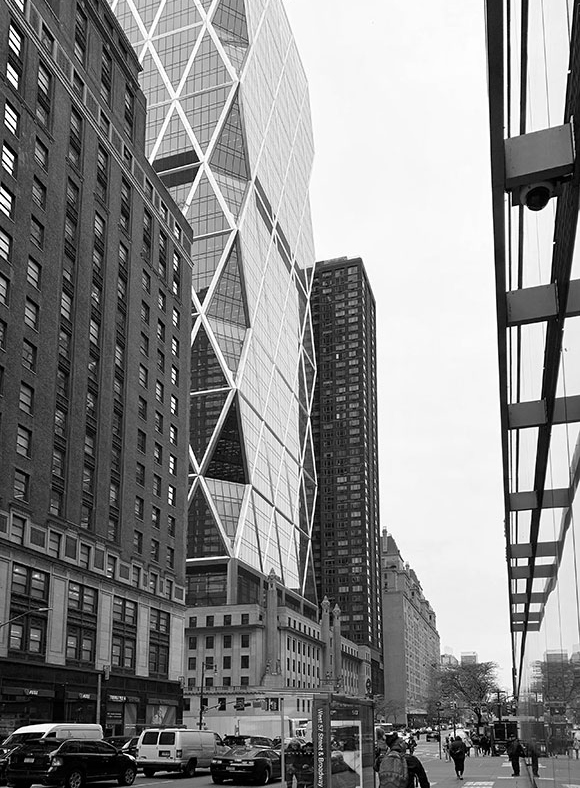
Hearst Tower, West 57th Street (photo by Anthony Poon)

9:14 a.m.: I have always enjoyed a modern addition colliding into a traditional building. At the Hearst Tower, Norman Foster added a 40-story steel and glass structure on top of a 1928 Art Deco, limestone, six-story landmark. “Juxtaposition” is an overused word in architecture, but here it is appropriate.

Upper West Side

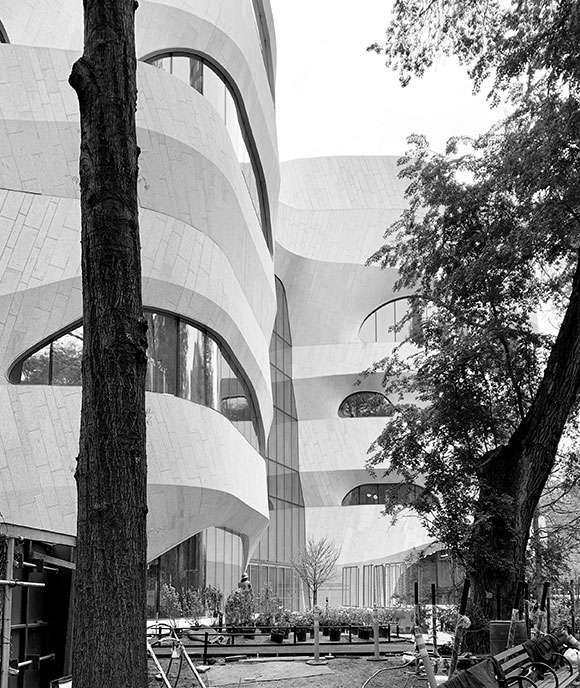
Richard Gilder Center for Science, Education, and Innovation, 415 Columbus Avenue (photo by Anthony Poon)

9:53 a.m.: Certainly to be the next New York architectural icon and tourist mecca, I arrived at the Richard Gilder Center for Science, Education, and Innovation just days before its grand opening. Jeanne Gang authored an oddly beautiful and Grotesque structure inspired by the geologic flow of wind and water—expressed by spray-on structural concrete, akin to that of a swimming pool.

Chelsea

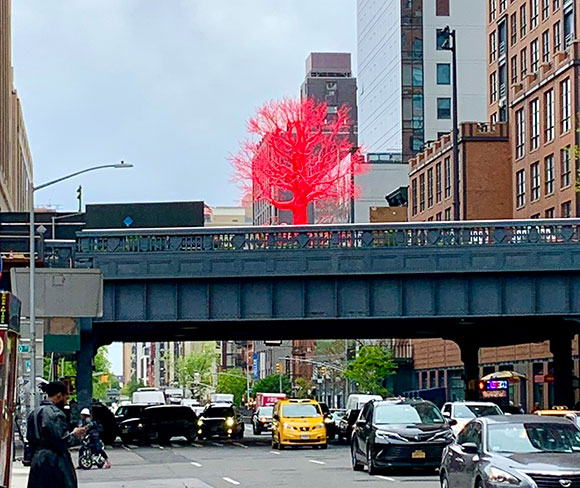
Old Tree, Highline (photo by Anthony Poon)

12:02 p.m.: Plenty has been written about the successes (and some failures) of the Highline. But artist Pamela Rosenkranz’s Old Tree caught my eye, a fuchsia-red sculpture standing within the grays and grit of its city backdrop. She questioned what is artificial vs. natural.

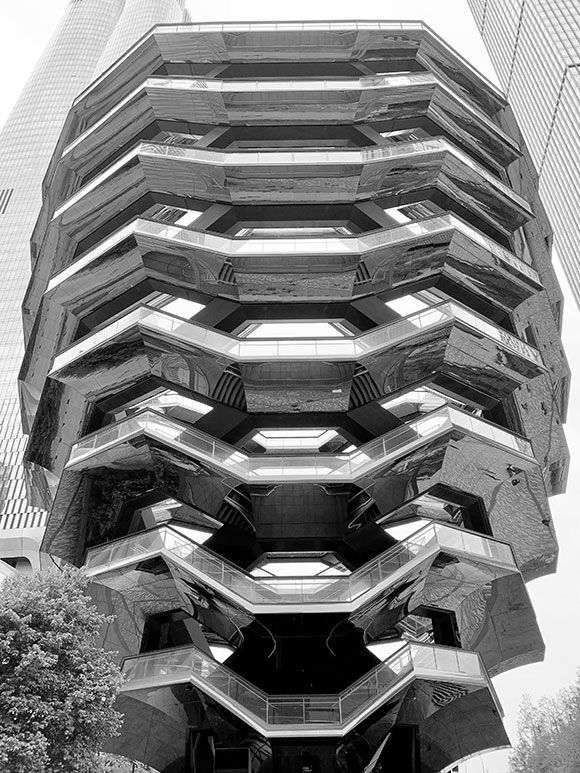
The Vessel, 20 Hudson Yards (photo by Anthony Poon)

2:14 p.m.: Created by Heatherwick Studio, the Vessel heroically rose 16 stories with 150 interconnecting staircases and 80 landings. But after three suicides from the top in one year, the Vessel closed. Today, only the ground level was available to visitors—ending the once-promised Eiffel Tower of Manhattan.

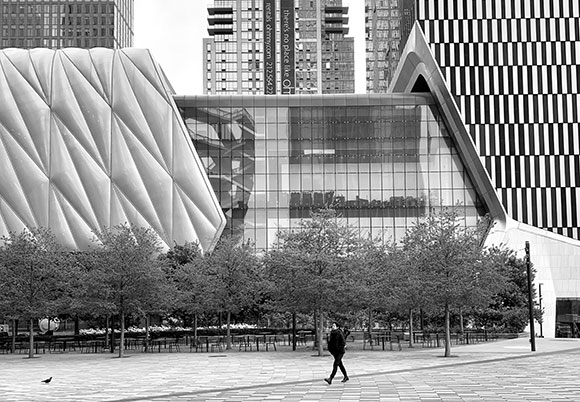
The Shed, 545 West 30th Street (photo by Anthony Poon)

2:36 p.m.: Mere steps from the Vessel sits the kinetic Shed by Diller Scofidio + Renfro. It is rare for architecture to move, yet the retractable shell of steel and fluorine-based plastic opens and closes on eight massive wheels 6 feet in diameter, transforming an outdoor space into a theatrical performance space, event hall, or exhibition space.

Little Island, Pier 55 (photo by Anthony Poon)

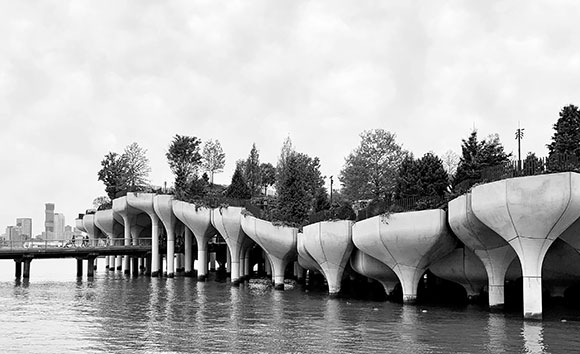
3:09 p.m.: A quirky visionary project, entitled Little Island, sits on 132 concrete structures called “tulip pots.” Heatherwick Studio, the same architect for The Vessel, created a 2.5-acre artificial island of rich topography and luxurious greenery, accented by a 687-seat amphitheater.

Lower Manhattan

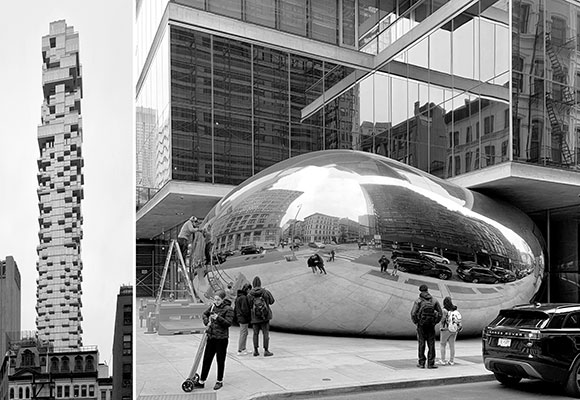
left: “Jenga Tower”; right: “Bean,” 56 Leonard Street (photos by Anthony Poon)

3:31 p.m.: At the street level of the aptly titled “Jenga Tower,” sculptor Anish Kapoor brought an iteration of his famous “bean” from Chicago. Whereas that city was often called “The Second City” to Manhattan, it is here that Manhattan is second place getting a self-derivative art piece.

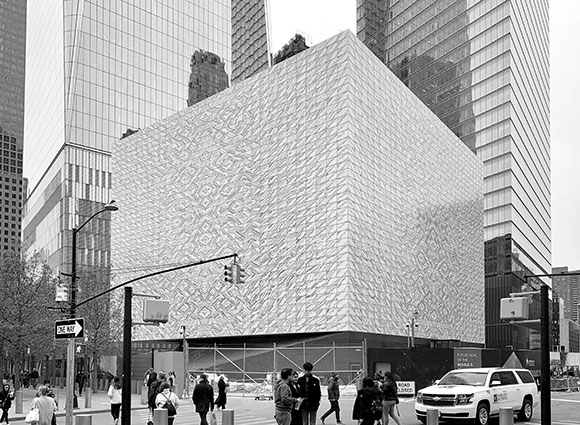
Perelman Performing Arts Center, 251 Fulton Street (photo by Anthony Poon)

4:35 p.m.: Architect REX’s Perelman Performing Arts Center will, when completed, serve as a hopeful beacon, transforming day to night, from a mute white cube to a glowing marble lantern. The design will complement the World Trade Center, its 9/11 Memorial, and the infamous Oculus, the most excessive subway station.

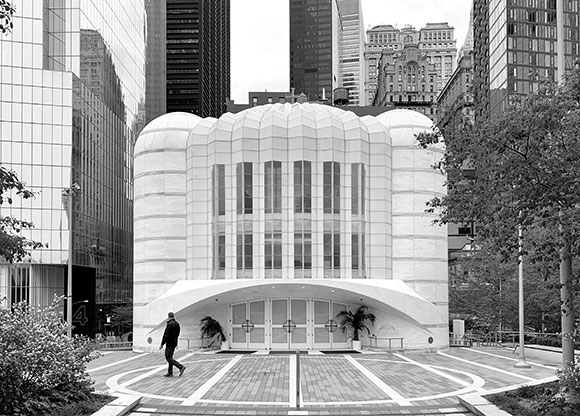
St. Nicholas Greek Orthodox Church & National Shrine, 130 Liberty Street (photo by Anthony Poon)

5:38 p.m.: Speaking of Santiago Calatrava’s Oculus, this architect/engineer brought a second landmark to the area, the St. Nicholas Greek Orthodox Church & National Shrine. Replacing the original 19th century church destroyed on 9/11, the new Byzantine-inspired building glowed, like the Perelman Center, as a lantern of renewal—through the use of thin slabs of translucent Pentelic marble—the same kind of stone used at the Parthenon in Athens.

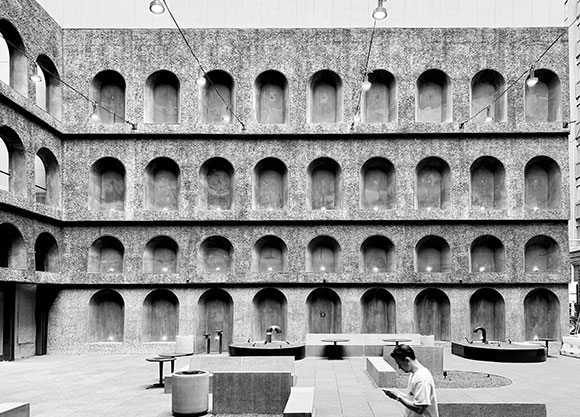
Courtyard of 130 William Street (photo by Anthony Poon)

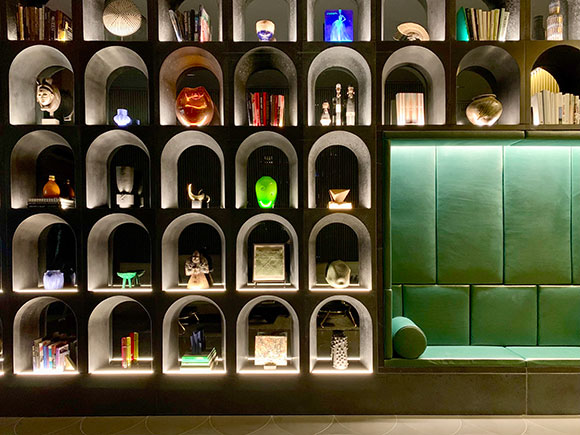
6:32 p.m.: Sir David Adjaye’s work is reductive, raw, deceptively simple. This 66-floor luxury condo tower explored arches and arches . . . and even more arches. The darkly-tinted, heavily-textured, hand-cast concrete panels expressed both an enigmatic mystery and somber toughness.

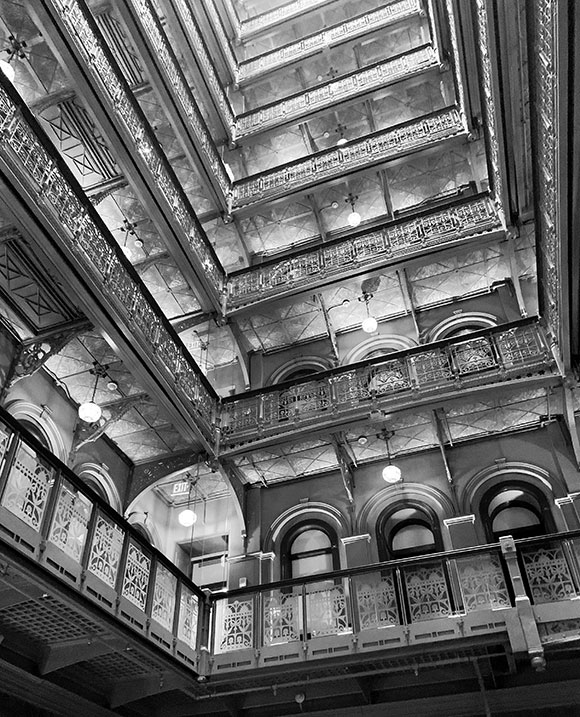
Temple Court, Beekman Hotel, 5 Beekman Street (photo by Anthony Poon)

7:00 p.m.: I concluded my NYC tour with a sumptuous meal at Tom Coliccho’s Temple Court restaurant set within the historic 1883 Beekman Hotel. The 2016 renovation of the Romanesque Revival structure, one of the city’s first skyscrapers, restored the splendor of its nine-story atrium.

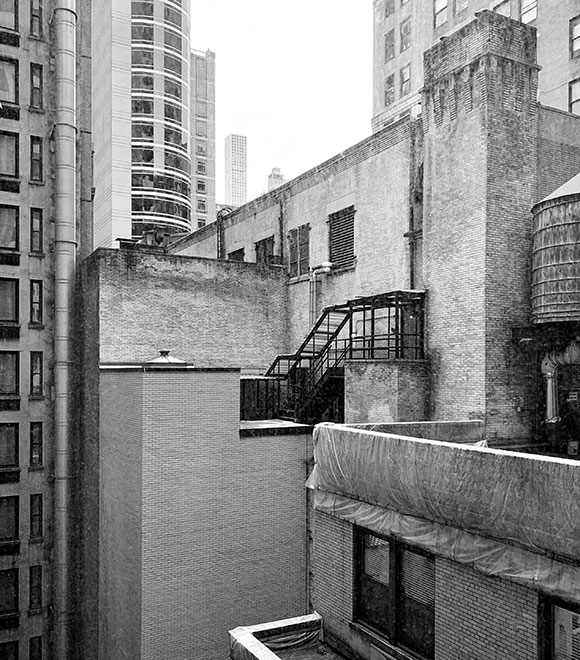
A view out of my hotel window, the richness of the rarely seen back-of-house, city fabric (photo by Anthony Poon)

(I thank John Fontillas, Principal of H3, for his insights into generating this list to play architectural tourist.)

#158: LOS ANGELES BAKER’S DOZEN

September 16, 2022

(photo by Julius Schulman)

As a Los Angeles architect, I am often asked, “What are your favorite buildings in the city?” Considering houses, concert halls, schoolstemples—it is difficult to answer. There are so many great works of architecture. To have parameters, I stuck to the City of Los Angeles. I did not include the many treasures in adjacent cities like West Hollywood, Santa Monica, Beverly Hills, etc.. Also, I couldn’t decide on the typical “top ten,” like I have done each year (2019, 2020, and 2021). So in no particular order, here you go: a Baker’s Dozen.

(photo by Juan Carlos Becerra on Unsplash)

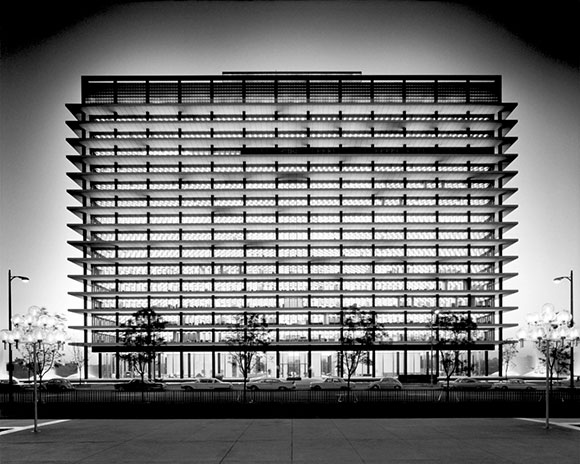
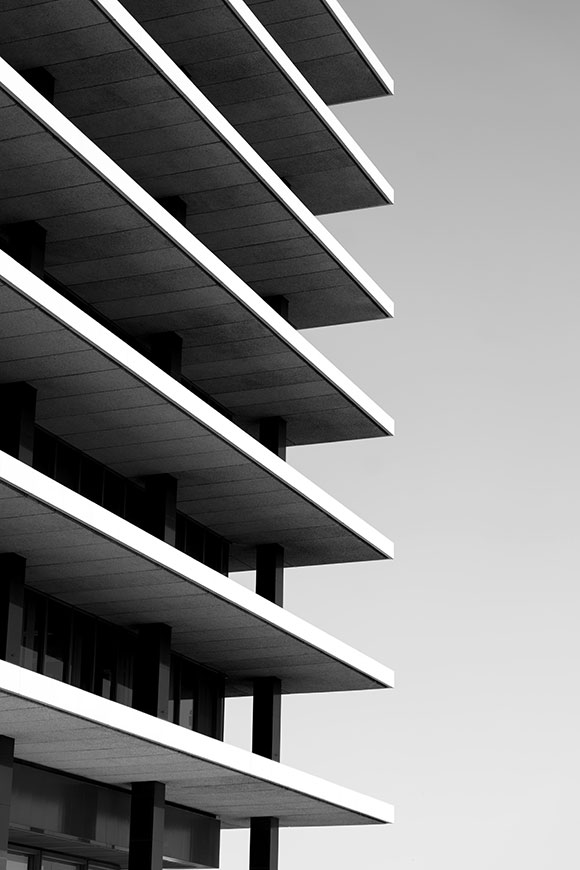
1: In the evening, the John Ferraro Building, commonly known as the LADWP Headquarters, glows like a beacon of downtown. More than a 1960s office building, architect A. C. Martin created an iconic structure metaphoric of the department’s command over water and power. Floating in a massive reflecting pond that hovers over the parking, the building captures one end of the city’s grand axis that aligns the Music Center and Grand Park, and terminating at City Hall.

(photo from raimundkoch.com)

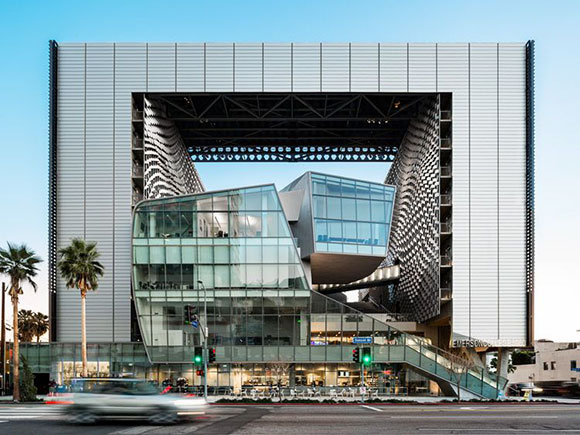
2: A city-within-a-city, Emerson College by Morphosis offers a collegiate identity unlike anything before. Within 107,000 square feet, two large sinuous structures sit within a ten-story, frame-like building—providing housing for 190 students, educational spaces, production labs, and offices. The technology of computational scripting guided the patterns of the aluminum sunscreens and organic building shapes.

(photo by Peter Thomas on Unsplash)

3: Few homes capture the zeitgeist of the Mid-Century Modern movement alongside the family life of the homeowners. Husband and wife design giants, Charles and Ray Eames, created this Case Study House No. 8, simply called the Eames House, to serve as their residence, work space, and design laboratory. The beauty of the architecture stems from the simplicity of form, lightness on the site, and prefabricated materials. Each year, 20,000 design fanatics tour this National Historic Landmark.

(photo by Anthony Poon)

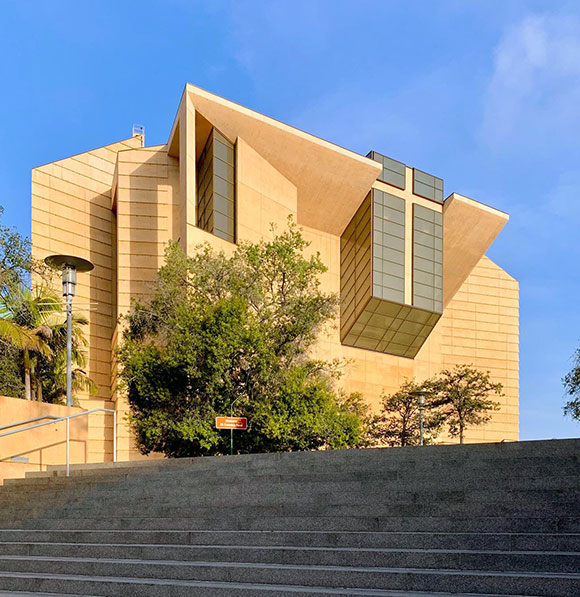
4: Rafael Moneo Arquitecto graces the urban landscape with his Cathedral of Our Lady of the Angels. Serving as the mother church for the Archdiocese of Los Angeles, this design explores a myriad of tilted lines (an avoidance of any right angles), solid concrete walls several feet thick, and the dramatic control of light and shadows—delivering a complex composition of tension/calm, grandeur/intimacy, and mystery/faith.

(photo by StockSnap from Pixabay)

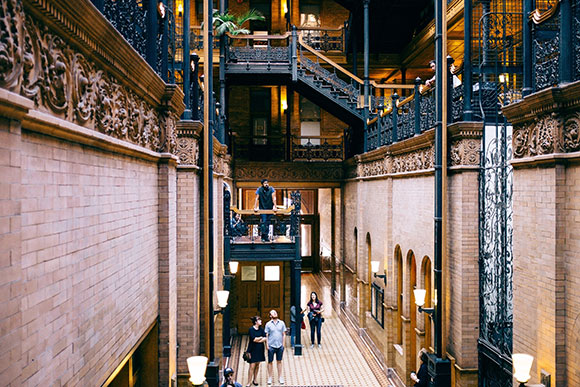
5: The 1892 landmark Bradbury Building by George Wyman and Sumner Hunt is a classic masterpiece of traditional materials, ornate details, and sun and air. Appearing in numerous works of fiction, movies, television, and music videos, the five-story office building was honored as a National Historic Landmark in 1977, Los Angeles’ oldest landmarked building—today restored to perfection. The skylit atrium—casting intricate shadows of ironwork against surfaces of tile, brick, and terracotta—delivers the beating heart of the building.

(photo by Anthony Poon)

6: The existing 1953 Getty Villa—a passable recreation of a 1000 A.D. Roman house—pales in comparison to the 2006 addition by Machado Silvetti. For this museum dedicated to the classical arts, the contemporary renovations and surgical insertions offer a contrasting dialogue of old and new , of history and the future. Like a palimpsest, the layers upon layers of materials, exquisite details upon exquisite details border on excessively articulate, yet reaches the sublime.

(photo by Anthony Poon)

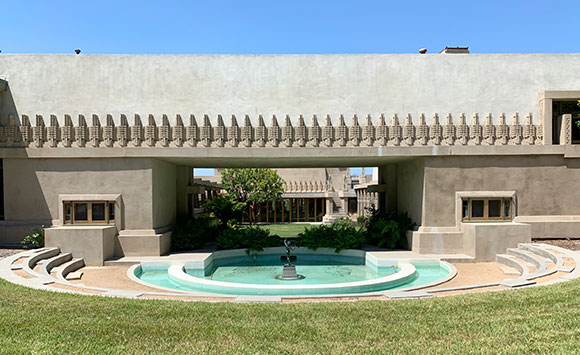
7: Frank Lloyd Wright’s  Hollyhock House was the first American work of contemporary design added to the UNESCO World Heritage List. Sometimes referred to as Mayan Revival, the ambitious courtyard house of 1921 comprises an intricate balance of split level floor plates, roof terraces, and steps throughout. The hollyhock—the favorite flower of the owner and oil heiress, Aline Barnsdall—drives the architectural patterns, decorative details, and stained glass windows.

(photo from lacma.org)

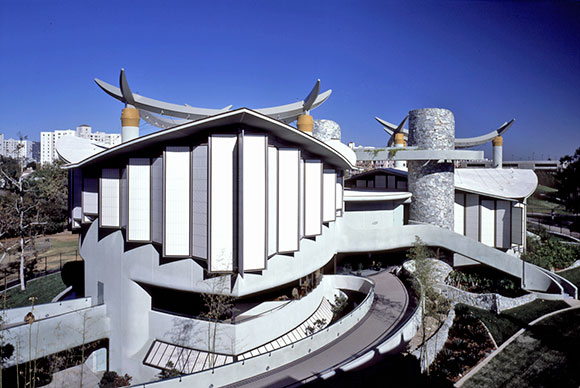
8: Upon completion in 1988, the Pavilion for Japanese Art baffled visitors. The enigmatic 32,000-square-foot building by Bruce Goff—a bizarre combination of sweeping roof forms, cylindrical towers, tusk-like beams, green stucco, and translucent windows—divided critics. Was the work visionary or grotesque? Master architect Peter Zumthor has decided the Pavilion’s worth: His master plan for the campus of LACMA (Los Angeles County Museum of Art), has already demolished nearly all existing structures. Goff’s building will remain.

(photo by Talal Albagdadi from Pixabay)

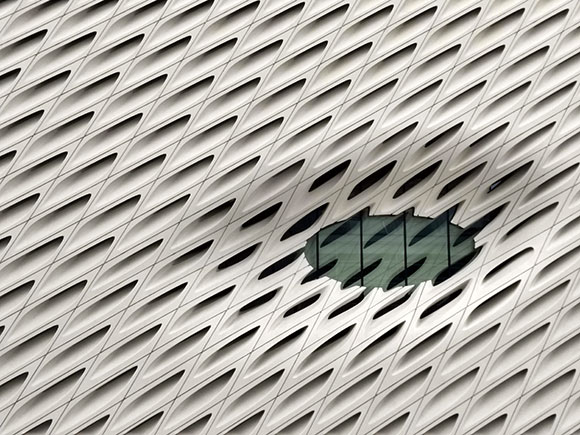
9: The honeycomb exterior skin of The Broad captivates passersby on this busy downtown street. An instant architectural icon and Instagram-able moment, this three-story museum by Diller Scofidio + Renfro presents a porous wrapper the architects call the “veil”—composed of 2,500 rhomboidal forms of fiberglass-reinforced concrete. Within this “veil” sits the “vault”—the concrete core of the museum housing laboratories, offices, and the massive collections of art not currently on exhibit.

(photo by Anthony Poon)

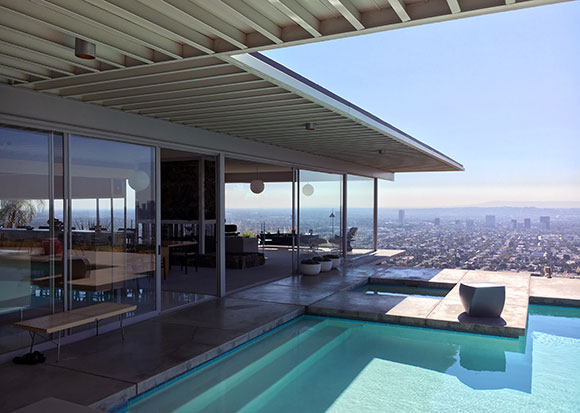
10: The Stahl House, or to many, Case Study House No. 22, is one of the most famous homes in the history of the architecture world. Designed by Pierre Koenig and made known by Julius Shulman, considered the greatest architectural photographer of all time, the soaring hilltop residence made the 2007 AIA list of “America’s Favorite Architecture.” My one criticism is this: The kids have to walk through the master bedroom to get to their two bedrooms. Perhaps an exploration of domesticity?

(photo by Anthony Poon)

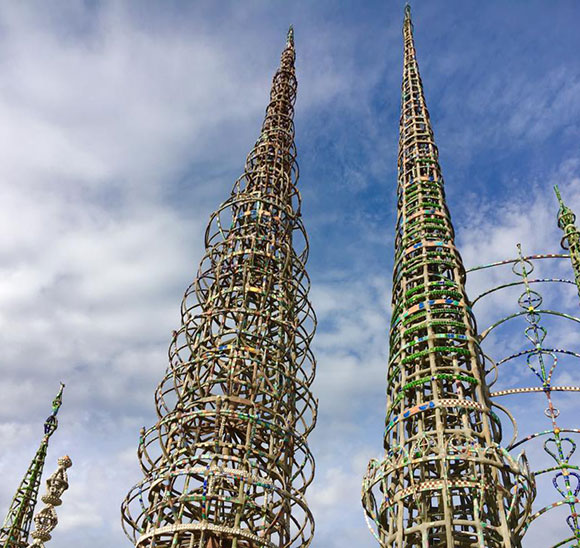
11. Both a work of art and architecture. Sabato Rodia, Los Angeles’ own Antoni Gaudi, constructed the Watts Towers with few tools and mostly his bare hands. From 1921 to 1954, this Italian immigrant construction worker toyed with concrete, rebar, wire, and tile—even ceramics, seashells, and broken bottles. Recognized with honors over time, the project was designated a National Historic Landmark, and one of only nine folk art sites listed in the National Register of Historic Places in Los Angeles.

(photo from jamesfgoldstein.com)

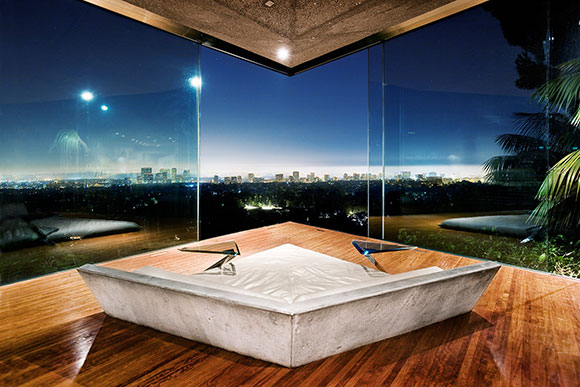
12. A master class in late Mid-Century Modernism, John Lautner gave us the Sheats-Goldstein Residence, a daring home set into the ledge of a sandstone hill. The intimacy of the arrival counters the living room’s explosive embrace with the city view and surrounding nature. The geometry of triangles upon triangles, a revolutionary concrete roof structure, and endless glass walls have captivated pop culture with cameos in films from Charlie’s Angels to The Big Lebowski.

(photo by Futuregirl from Pixabay)

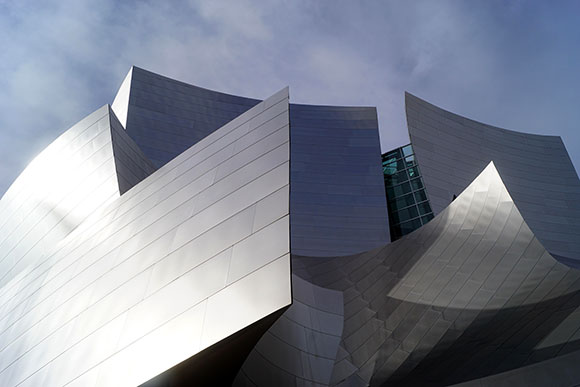
13. No list of local great buildings can exclude Frank Gehry’s almighty Walt Disney Concert Hall. Though the architect had to travel to Bilbao, Spain to prove he is the most famous architect of our time, though the Disney Concert Hall took 15 years to complete and resulted in 300% over budget, the project stands as prominent as the Eiffel Tower, the Louvre, or the Sydney Opera House.

As mentioned, there are so many iconic masterpieces just outside of Los Angeles. Here are half a dozen. And for my favorite buildings of all time, here.

top left: Creative Artists Agency, Beverly Hills, by I.M. Pei and Associates (photo from techooficespaces.com); top middle: Prada Epicenter, Beverly Hills, by OMA (photo by Anthony Poon); top right: Horatio Court, Santa Monica, by Irving Gill (photo by smallatlarge.com); bottom left: Broad Beach Residence, Malibu, by Michael Maltzman Architecture, Inc. (photo from mattconstruction.com); bottom middle: Schindler House, West Hollywood, by Rudolf Schindler (photo from makcenter.org); bottom right: Art Center College, Pasadena, by Craig Ellwood (photo by u/archineering)
© Poon Design Inc.